

Just to preface this post, it’s meant to be directional, not necessarily something that will help you pass your ME 401 or ECE 304 finals1… But:
If you’re into electronics, you’ve probably seen some variation of the image below. And if not, you need to:
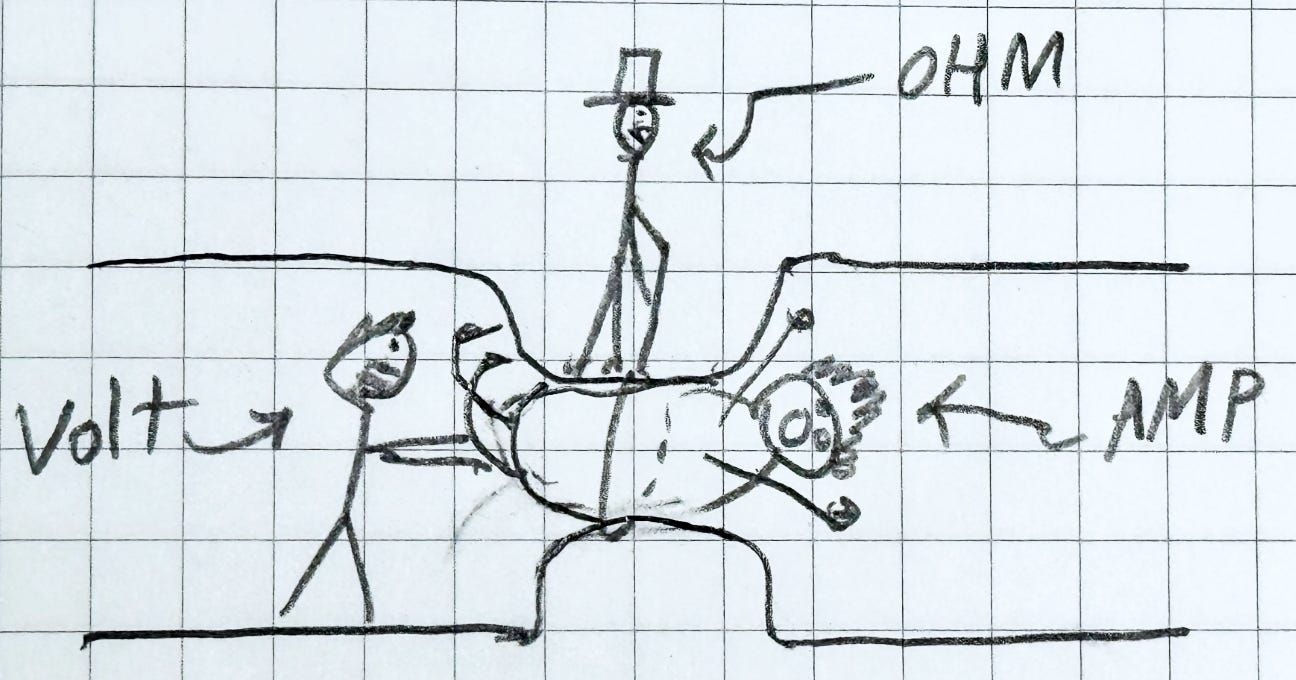
Electronics deals with the flow of electrons, and the unit of electron flow (current) is the ampere, or amp for short. Electrical potential, measured in volts, pushes electrons through a conductor (e.g. a wire), while resistance, measured in ohms, restricts this movement.
The equation regulating electron flow is V = IR, voltage = current x resistance. Rearranged: current = voltage / resistance. Increase voltage and you get more current, increase resistance and you get less current. This is arguably the most fundamental concept in electrical engineering.2
If you’re into offbeat engineering, real-world builds, and practical tech thinking, subscribe 👇
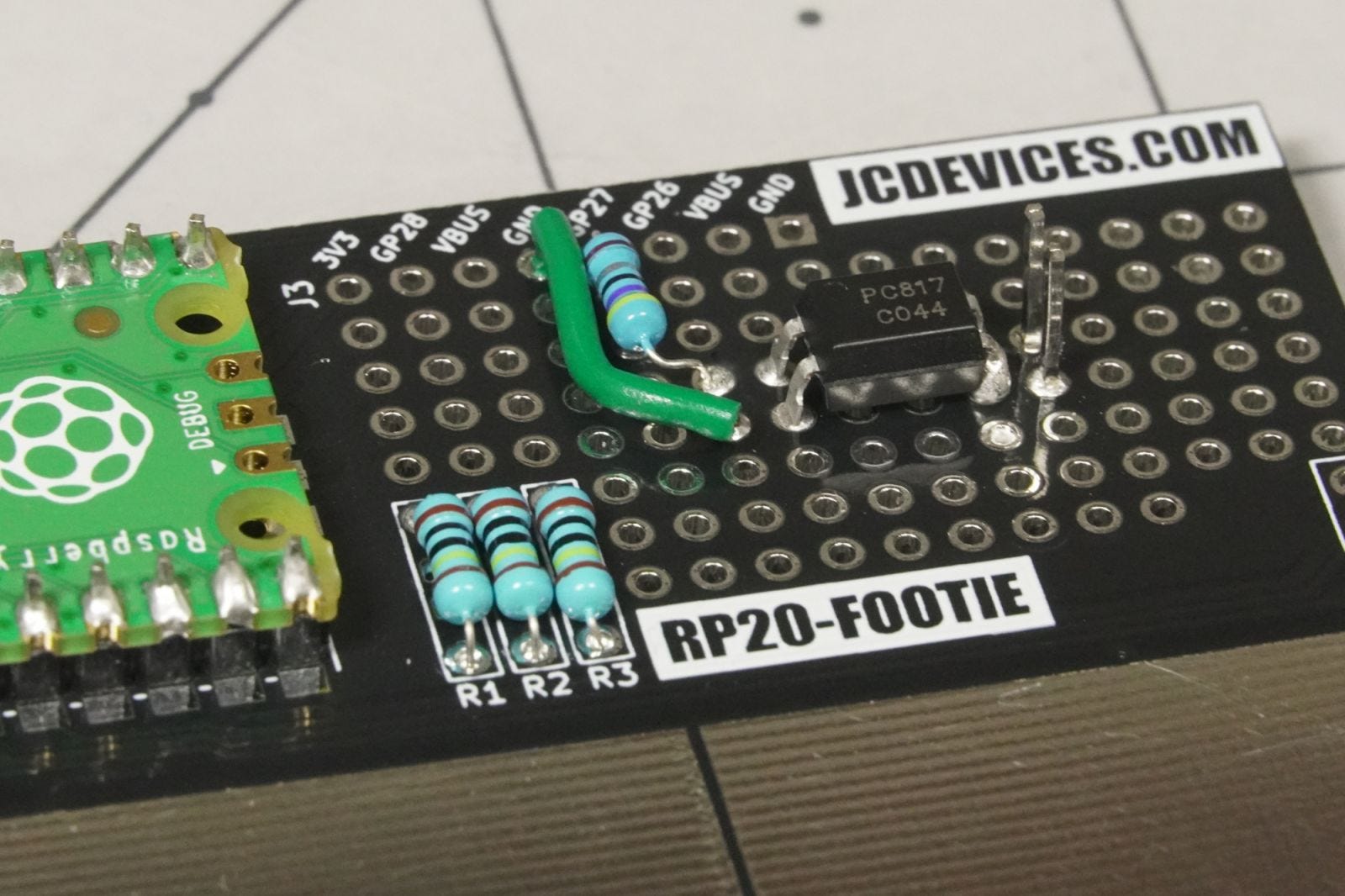
Resistance is implemented purposely in the form of resistors (the blue-ish things shown below) placed in a circuit to increase this value. The conductive medium also has a bit of built-in resistance for each unit of length that the electrons must travel.3
Fluid flow as an analogy for electronics
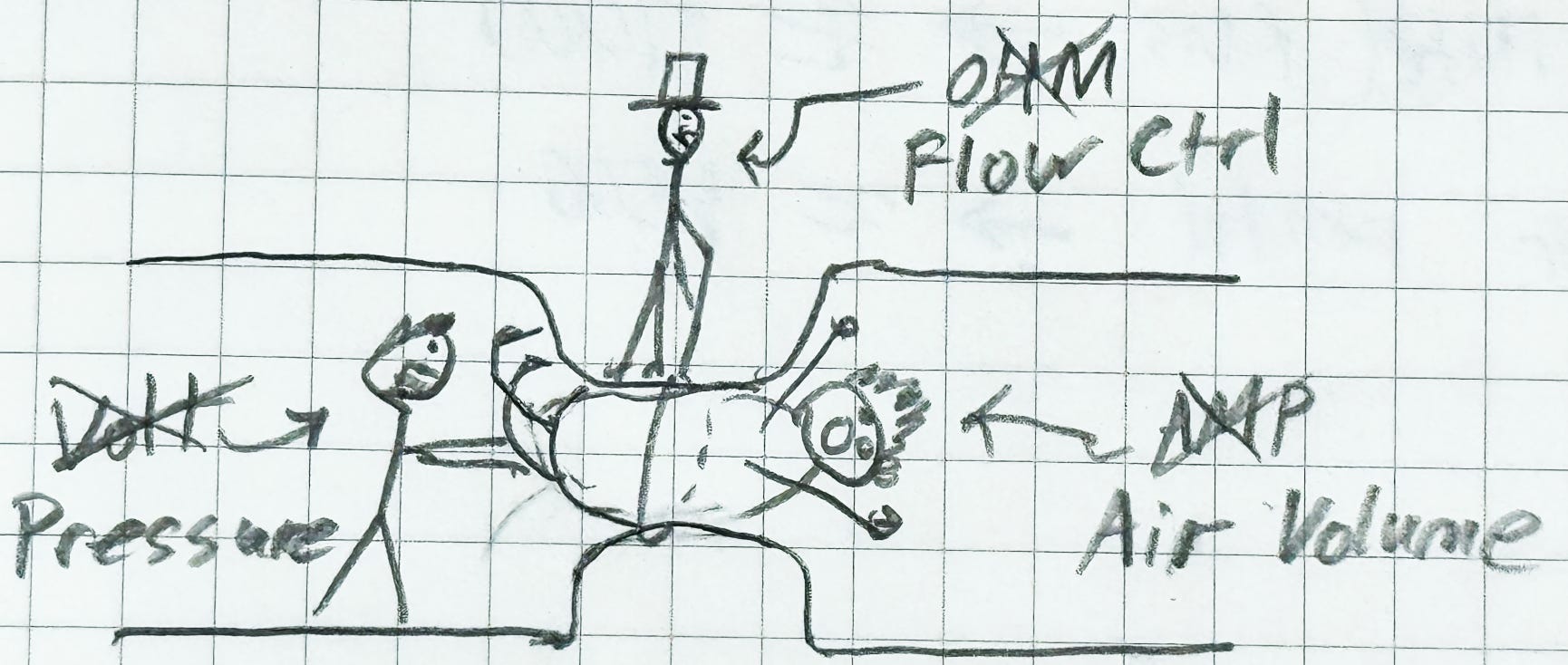
And since you’re still reading, you may have heard water used as an analogy for how electronics work. Here I’m going to turn that on its head and use that EE illustration to show a bit about how pneumatics works:
Ironically enough, even though my education is in Mechanical Engineering (not Electrical) I had to look this one up. The Hagen–Poiseuille equation (below) dictates flow in a circular pipe for an incompressible fluid. It’s a bit more complicated than the EE equivalent, but the basic concepts are there.
All things being equal, as pressure p increases, volumetric flow rate Q also increases. As the R or A terms increase (reducing resistance to flow), Q increases. My drawing is directionally correct, if imprecise.
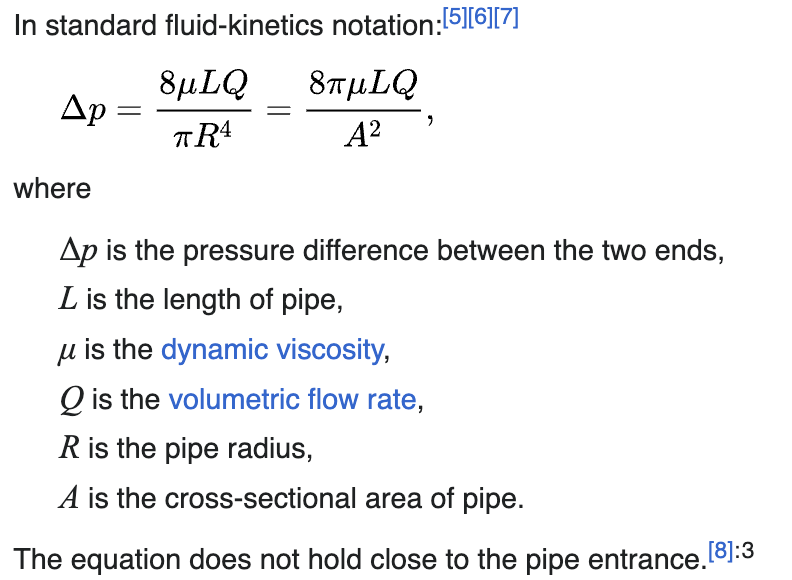
As for why this is more complicated, it would seem to me that the flow equation is tackling things on a more granular level.4 Consider that electrical resistance is just R. For the incompressible fluid, the R equivalent factors in L, µ, and R/A, taking into account the actual shape of the transmission medium.
This assumes incompressible flow, which wouldn’t always be correct, but is probably close enough in many applications. It’s been a while since I took Fluid Dynamics. And while I did take a tech elective called Compressible Flow, the title of the class is about all I remember of that course.5
What about capacitance (& other)?
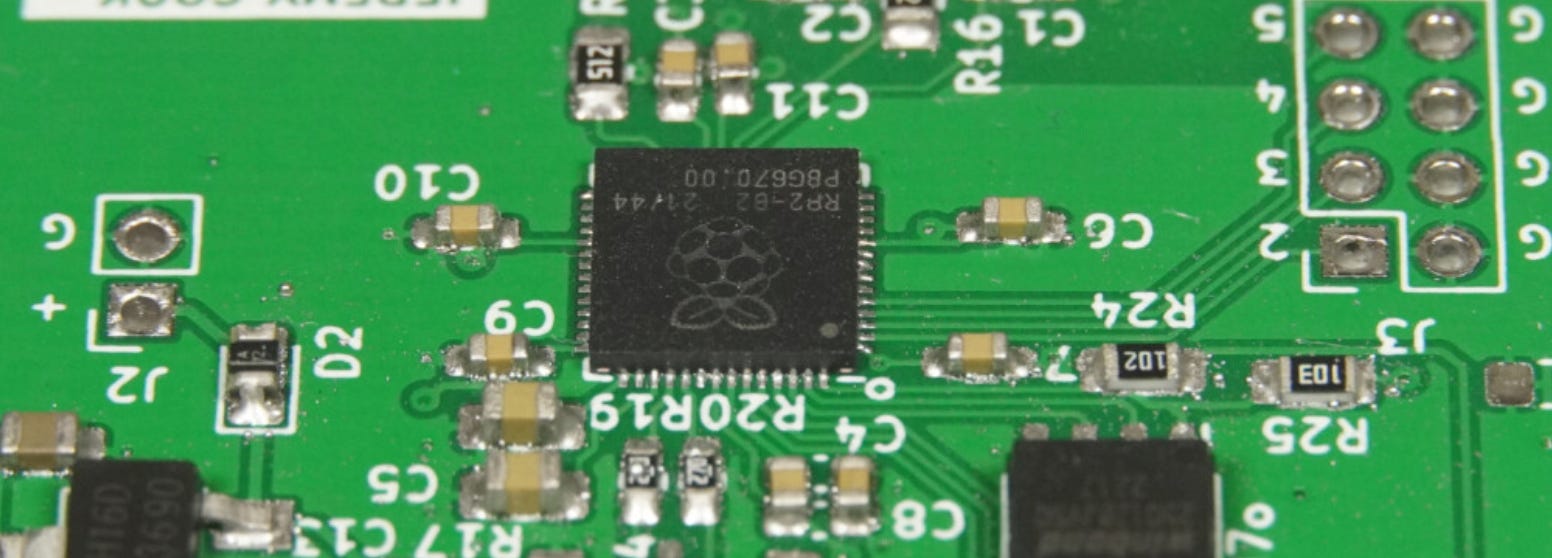
Capacitance, in electronics, is the ability to store a charge, and if you need capacitance in your circuit you add… one of more capacitors. They work really well for a number of jobs, including evening out the current input to microchips and allowing them to run better. So if your power supply varies a bit, your chip isn’t affected that much if things are designed correctly.
Similarly, if you have a machine that needs air power to run, you can put a small air tank on the machine itself, evening out air flow during times of high demand. You can also just coil up extra line to allow air to be stored there, sort of like how electrical wiring has a bit of capacitance itself.
You could probably push this thinking even further with inductors or other components somehow, but I don’t have a good example off the top of my head. Feel free to leave a comment if you have any ideas.
Engineering… it’s all the same?
If you’re familiar with my work from other publications, you might think that I’m an electrical engineer, or perhaps even a computer science person. In fact, my degree is in Mechanical Engineering, and besides a “Betty Crocker” EE course6 that I took in college, I don’t have that much formal education in the field.
That said, I’ve used relatively little of the nitty gritty details of what I learned in college as a Mechanical Engineering student. However, being able to think as an engineer, and the knowledge that I’ve faced some really, really hard mental challenges, means that I’m fairly confident tackling new and unknown technical things.
That might mean taking on something that an EE might have more background in. Or it could mean working on other pursuits that I have no idea how to do… yet. I know that I can do it. It’s just a matter of study and/or practice.7 -JC
Techadjacent is where I share engineering ideas, builds, and practical tech analysis. Subscribe to get the next post in your inbox — published weekly👇
Thanks for reading! I hope you follow along on this Techadjacent journey. Fair warning: I can and do get a little off-topic in the footnotes.
Note: Some links may be affiliate
Addendum/Footnotes:
Now you’re an engineer? Well, you’re probably not a doctor… or a coal miner either, but I appreciate you reading. Actually, if you are a coal miner, LMK in the comments; I want to know more. I’d be especially pumped if someone enjoys reading Techadjacent while covered in soot deep underground during breaks.
Most fundamental concept in EE? To be fair, my degree is in mechanical engineering, so feel free to disagree in the comments.
Also, while this is a nice little cartoon, and directionally correct, I would argue it’s slightly inaccurate. In physical terms, the fat guy is more like electron charge, measured in coulombs than electron flow, measured in amps. However, the units get rather complicated at that point, and the coulomb isn’t used as much in basic EE. It’s probably not the right choice for a funny cartoon.
It’s thus also a good illustration for one of the challenges of being a technical writer, while appealing to a broad-ish audience. There’s always a balance between being precise and/or accurate and readability.
AC, or alternating current, electricity works a bit differently. While sort of understand it, as a mechanical engineer I’m not confident enough to explain it here. I’m sure ClaudeGPlexity can give you some questionable information if you ask it nicely and/or feed it tokens like Pac Man trying to get that last mini-dot.
I’d say EEs don’t care about how the electrons actually bounce around inside of a conductor, but at some point this seems to become important for EMI effects, conductor coupling, and other rather advanced topics.
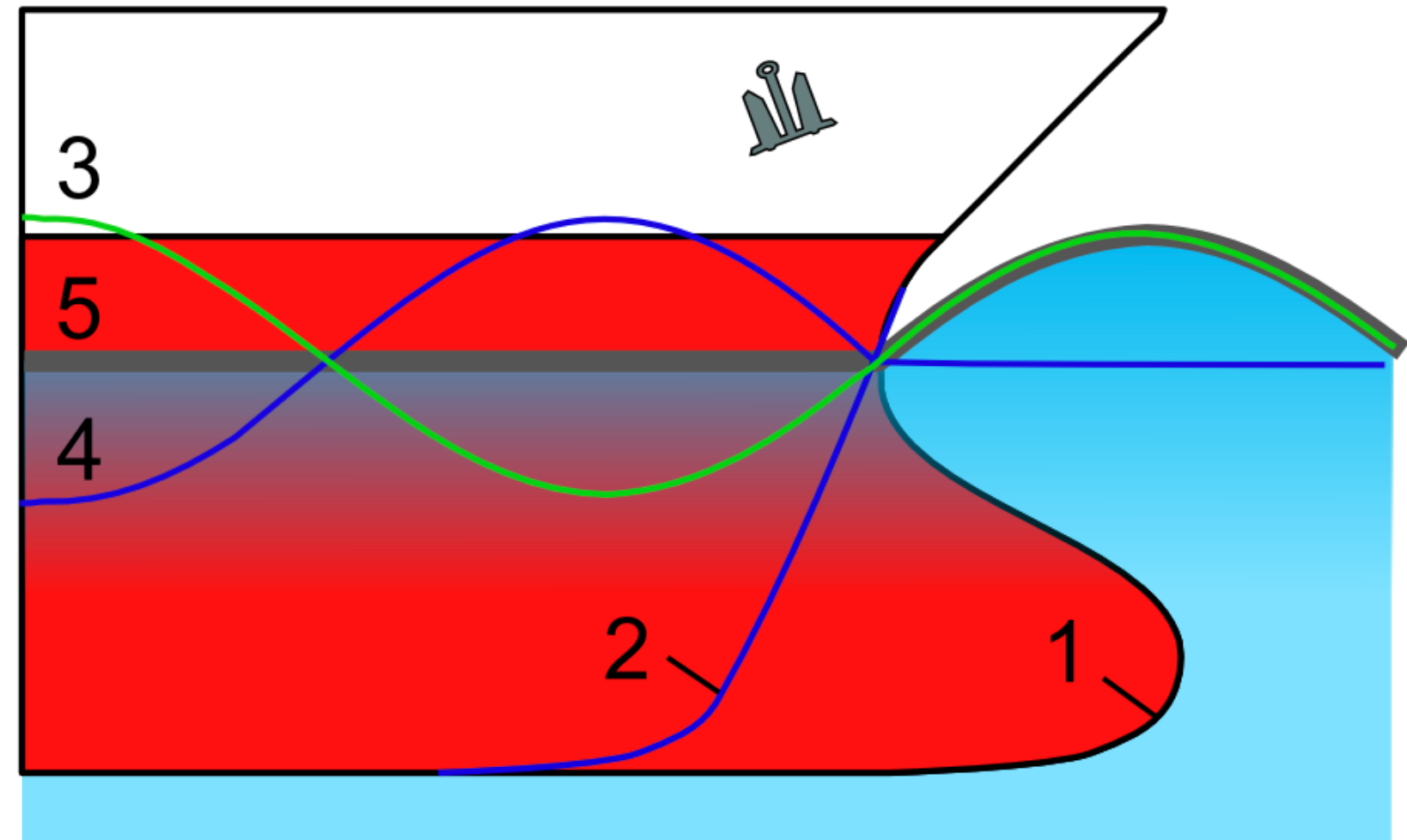
There was some extra credit question in that class that asked why ships often have a bump below the waterline on the bow. The answer I gave is that it changes the mach number of the water flowing over it somehow and makes ships more efficient. IIRC I only got partial credit, so I’m not sure that was entirely true. Here’s some more info if you’d like to research yourself.

Betty Crocker, i.e. the cookbook. Put numbers in the equation and out pops your cake solution. An EE at a former job asked me in a meeting if I’d taken a Betty Crocker EE course as a way to ensure I had some background for what he was talking about. I don’t remember if I understood what he told me or not.
I also took part of the first EE circuits course which I dropped. I wasn’t quite sure what engineering field I wanted to go into when I started attending college. ME seems like it was a pretty good choice:
Best AI-Dominated Future Career Choice: Mechanical Engineering?

Skilled Programmers Will be TERMINATED
I mean, within reason. Don’t expect me to derive Einstein’s theories, perform advanced tensor math, or remember all/most of my family’s birthdays.
Of course, these days, you can ask the Internet, AI, YouTube, etc for help. All are certainly great resources, but I also worry about them becoming to much of a mental crutch. I suppose the same thing was said about calculators decades ago… Maybe even paper and writing things down versus memorization long before that.
Things always change, just make sure that change is for the better — for you.