

Quoting from the Wall Street Journal:
Earlier this month, Fender sent cease-and-desist letters to other guitar builders, telling them to stop production of any Strat-shaped guitars and to recall and destroy such instruments. The targets range from a boutique builder in California to well-known brands including PRS.
First off, I don’t begrudge any person or company the right to defend its intellectual property. Whether you do so or not needs to be balanced with many factors. If you decide to go that route, you have my blessing1 to pursue your case promptly and effectively.
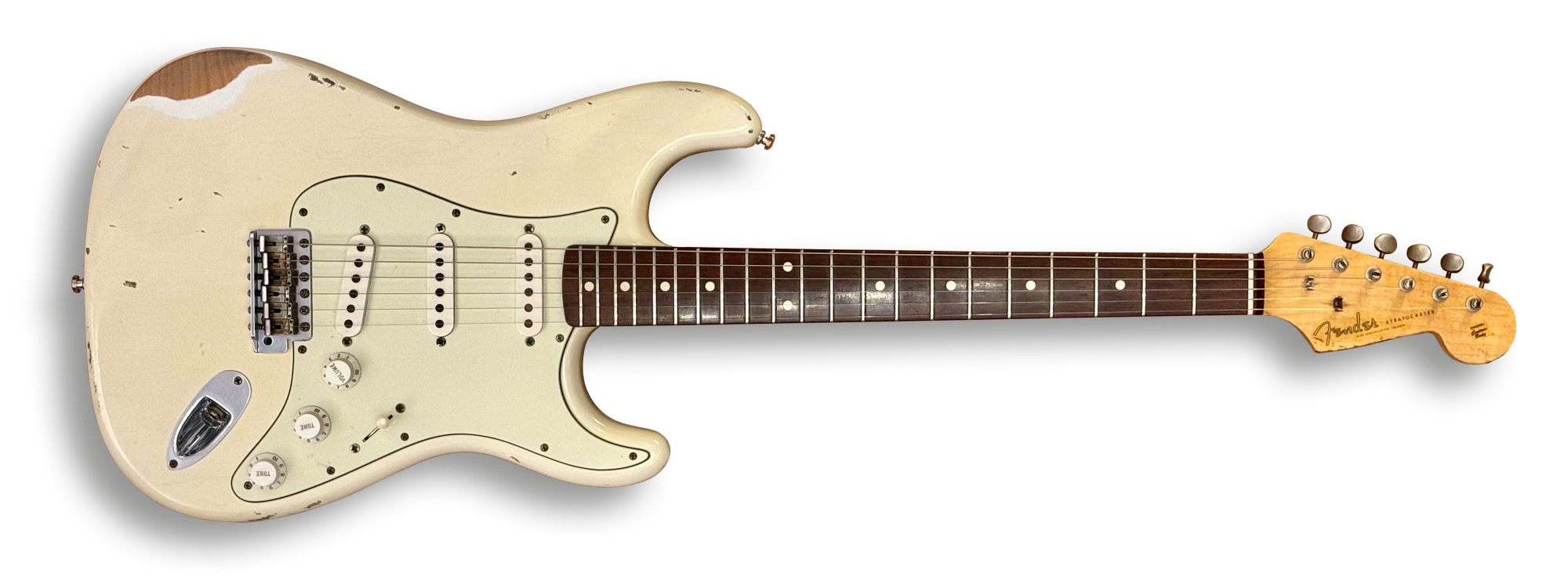

Fender already tried legal action on this front in the USA… and failed. Now the details are different, and I suspect they will largely fail again. Even if they were to be successful this time, I question whether it’s even worth defending from a monetary standpoint. More details to follow…
If you’re into offbeat engineering, real-world builds, and practical tech thinking, subscribe 👇
The legal question
First off, I am not a lawyer, and I obviously don’t know everything about this case. That said, I’ll give my opinion anyway:
If you want to protect an industrial design, in the US you can do so via a Design Patent. Which lasts 15 years. The Stratocaster has been produced since 1954, so — for round numbers — let’s just say such a patent on the Stratocaster could have lasted until 1970. There was, in fact, a patent filed in 1954 on the guitar’s tremolo device (AKA whammy bar), though I was not able to find an actual patent on the functional, artistic body style. The older Telecaster was patented in 1951.

So neither patent would apply. Though, to be fair, I don’t think they’re concerned about the Telecaster. One might (somehow) argue for trademark protection, which could be in effect today, but since it’s been in use by a wide range of manufacturers with little legal pushback for decades, that would be a bit of a stretch…
However, stretch they did (already), and in 2009 Fender tried to claim trademark protection for the Stratocaster. Thankfully, and logically at that late (even then) date, this attempt was rejected. Now, 17 years later (per the same WSJ article):
earlier this year, the Regional Court of Düsseldorf in Germany ruled in favor of Fender in its copyright case against a Chinese musical instruments company, which never responded in court. The court issued a default judgment and said the Stratocaster was a copyrightable work of art.
So they’ve decided to use this as a basis to harass US-based makers of Stratocaster-clone guitars.2 Presumably, their end goal is to to sell more genuine Stratocasters and related merchandise, ultimately making more money for the company.
Knockoffs are actually GOOD for business?
When I first read the WSJ article, it saddened me a bit. Then I considered that I only play knockoff Telecasters. My purchases mean the joke is on them... Or is it? I then looked over toward my inexpensive kit Telecaster and realized that no, the joke is not on them whatsoever.
Next to my guitar is a genuine Fender Mustang LT25 amp that I purchased ~6 months ago for $168.99. Also, I replaced the cheapo pickups that came with the guitar with… Fender Tex-Mex pickups for $75.59 (nearly the price of the original kit). Fender has financially benefitted from my cheap entry into playing guitar ~2.5 years ago.
My purchases are only going to keep the lights on at Fender for a few seconds. However, multiply those by the thousands of guitar players who have spent way more money with Fender than I — and that got into the hobby via a cheap knockoff — and you have a significant amount of money. Knockoffs are big business for Fender, even if they don’t actually sell them.3
An illogical pursuit
Fender is spending money to pursue what seem to me to be rather frivolous legal avenues. AND they’re creating significant ill will among people who buy, use, and love (loved?) their products.
This means something to me because I play guitar. However, it should also mean something to anyone who designs and/or sells products. There’s nothing wrong with keeping a design proprietary and defending it when it makes sense. There’s also nothing wrong with making your designs open source.
However, at some point you can’t stuff the genie back into the bottle. If you try to do this too late or in an otherwise inappropriate manner, you get the worst of both worlds. I think it’s time for Fender to do a bit of introspection.
Whether you sell guitars, dev boards, 3D printers, or anything else, consider things from all angles before you pursue legal options. Again, I am not a lawyer… though if I was I suppose I would have a vested interest in promoting the legal route. -JC
Techadjacent is where I share engineering ideas, builds, and practical tech analysis. Subscribe to get the next post in your inbox — published weekly👇
Thanks for reading! I hope you follow along on this Techadjacent journey. Fair warning: I can and do get a little off-topic in the footnotes.
Note: Some links may be affiliate
Addendum/Footnotes:
Not that you asked. And no, you don’t always have my blessing, even though it means almost nothing in nearly every situation.
My thought was that this only applied to guitars exported to Germany, but the article at least doesn’t seem to say that. Maybe the logic is that if they are sometimes exported to Germany, than manufacturers should still destroy them? Seems questionable at best.
…Apparently Fender thinks thatb Germany won WWII and we live in die Vereinigten Staaten von Amerika. I think that was a minor plot line in The Man in the High Castle when the Oberführer’s son tries to buy a knockoff Stratocaster from greater Japanland and gets taken off for reeducation and/or sterilization.
I stopped watching the show at some point. It just got a little too weird. Also, now it’s on Netflix, not Amazon. What is the world coming to???
And, I suppose, Fender couldn’t sell knockoff Fenders even if they wanted to.
It’s a pretty expensive game of whack a mole to play, if you consider all minor variation workarounds, countries in the world, etc. I’m a little jaded with the patent system from my experience as a founder - I’m not sure it protects small innovators as the original intent was. For fender, I agree with your arguments… it’s such an old product that I’m not sure this makes any sense.