

Bolts screw into threads—typically on corresponding nuts—securing anything caught between the two. You can also cut internal threads on metal, plastic, even wood by first drilling a hole, then twisting a tap into this to form helical groves. The thing itself then becomes the nut or nuts, eliminating a bit of extra hardware that you would otherwise have to worry about.
You can also cut threads in 3D-printed parts. However, in this case there’s an even easier way to generate this feature: model it in your CAD software and let the printer make threads for you!
If you’re into offbeat engineering, real-world builds, and practical tech thinking, subscribe 👇
Yes, you can just model and 3D print working threads on your part. I was skeptical, but for a recent project I modeled threaded holes in CAD (via Autodesk Fusion 360’s hole tool), then printed them on a Prusa Core One printer. They turned out great in my test of 1/8 and 1/4 inch pipe threads, along with M3 threads for — you guessed it — a metric 3mm diameter bolt:
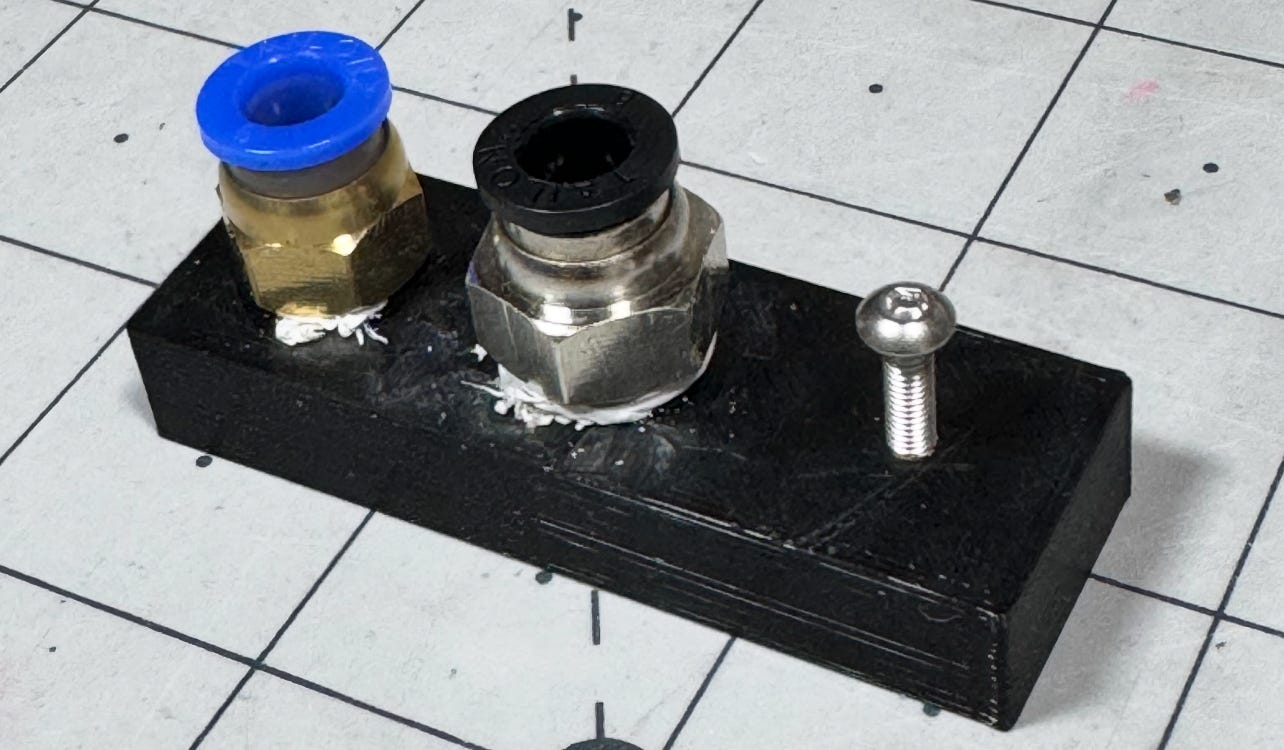
This foray into printed threads was for the low (i.e. no) pressure drip irrigation setup,1 where I successfully printed 1/4 inch pipe threads for water distribution. It seemed to me that 1/8 inch pipe threads, much less the tiny threads of an M3 bolt would be too small to produce reliably. However, in this limited test — using PETG material — my printer just took care of this feature with no complaints.
Other 3DP threading options to consider
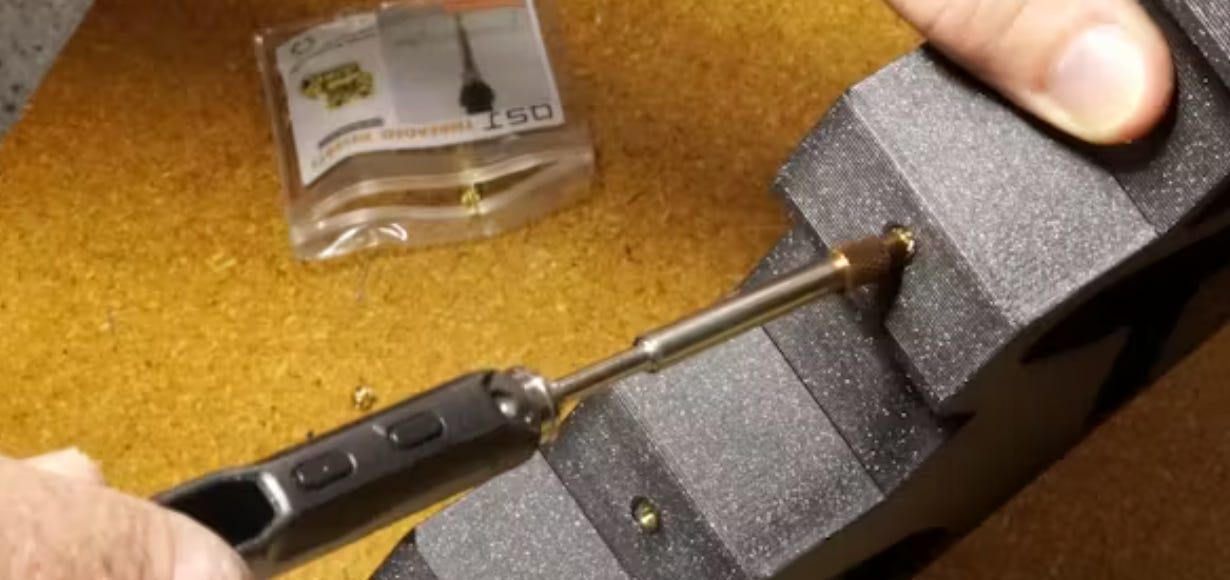
This post encourages setting aside, not throwing away, inserts, embedded nuts, and other techniques. Recognize that they aren’t the only option, but they can certainly be useful in many situations.
For example, you can use heat-set inserts with 3D-printed things for smooth, reliable threads. You can also integrate regular nuts into your print by leaving an opening in the side into which they can slide, or by pausing the print process so you can put it in place before being covered up by plastic.
And there are several other options which I could go over, and perhaps even test, but I would be far from the first to do so (and probably not the best either). My mission here is to tell YOU about 3D-printed threads, AND note that, after trying it myself, I’m ready to add it to my repertoire of techniques.
For a more thorough 3DP thread treatment, Thomas Sanladerer’s video below is a good resource, despite the rather clickbaity title/thumbnail:
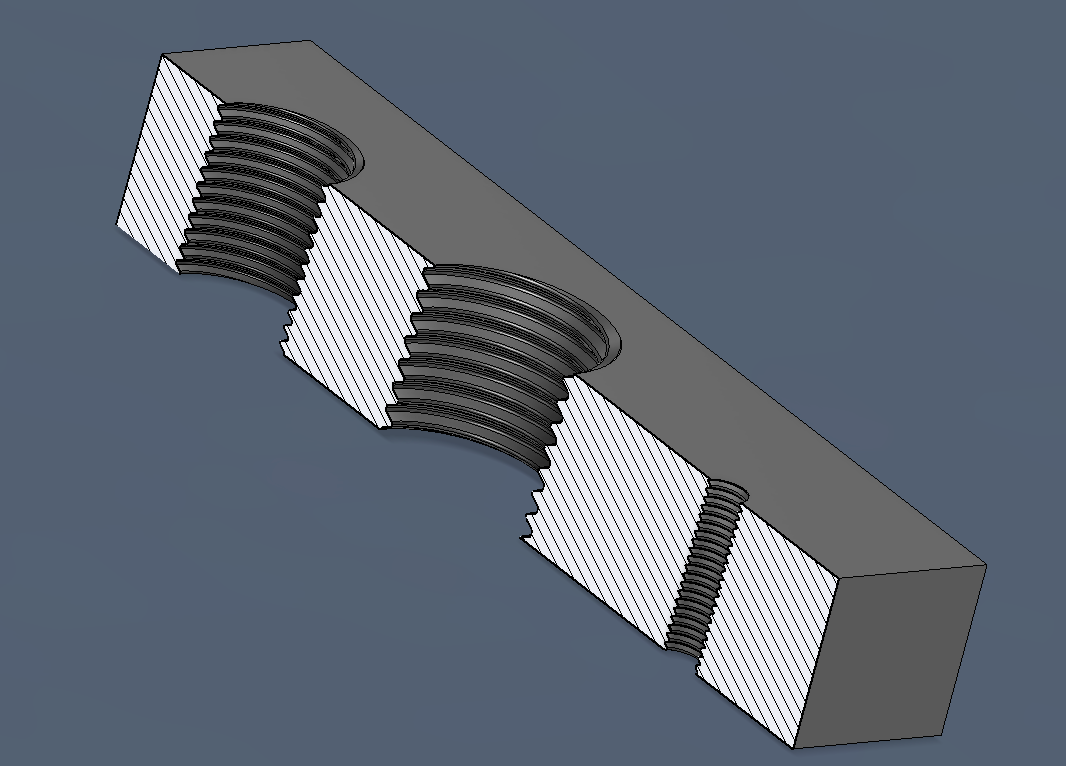
To be clear, to generate 3DP threads I just generated normal tapped holes in Fusion 360 with the hole tool, then let my Core One go to work. Make sure to check Modeled,2 in Fusion, otherwise the threads won’t actually show up on your STL. Sanladerer’s self-forming lobed technique (shown in the video above) could be useful, especially if your printer is finicky, but it takes more time and/or finesse to model.
Limited data, limited applications?
I’ve only done used this technique so much, so at this point I wouldn’t trust it for anything particularly critical and/or subject to significant force. Most, if not all, available insert options would likely be smoother, stronger, and/or more reliable than printing threads in your thing.
But often printed threads are good enough. Engineering is all about tradeoffs. Consider where this would work well.3 Use as appropriate.
Thanks for reading. -JC
Techadjacent is where I share engineering ideas, builds, and practical tech analysis. Subscribe to get the next post in your inbox — published weekly👇
Thanks for reading! I hope you follow along on this Techadjacent journey. Fair warning: I can and do get a little off-topic in the footnotes.
Note: Some links may be affiliate
Addendum/Footnotes:
My (initial) drip irrigation post:
Use Air Conditioning Condensate for Irrigation (Free Water, Part 1)

It’s nearly May here in Palm Harbor, FL (i.e. ~Tampa for those from not-FL). While it’s still quite nice, the season of heat, humidity, and near-constant air conditioning is nearly upon us.
Video - modeling an M3 hole using Fusion 360. Be sure that Modeled is checked or you will be disappointed:
Knowing is half the battle, as GI Joe said. Or, to put it in Mortal Kombat terms, there is no knowledge that is not power. It seems that in 80s and early 90s, such forms of entertainment had to justify their existence somehow. This apparently meant short educational blurbs interspersed among hours of violence.

Good times. FINISH HIM! 🥋👊