

It’s nearly May here in Palm Harbor, FL (i.e. ~Tampa for those from not-FL). While it’s still quite nice, the season of heat, humidity, and near-constant air conditioning is nearly upon us.
Not entirely coincidentally, I got a new air conditioner. Like the old air conditioner, it drips quite a bit of water out of a pipe on the side of our house, formed as heat and moisture is extracted from the air.1 While this water normally goes to waste, it doesn’t have to. Thirsty plants would be grateful for this house-comfort byproduct.
Thus was born my unconventional — and free — irrigation setup. Below I outline four AC-irrigation options, from extremely simple, to a bit more complicated, to… someone else’s idea that involves an electrical condensate pump.
This is PART 1 of a 2-part series about free irrigation water. Subscribe to get PART TWO/DEUX/DOS in your inbox👇
And/or subscribe if you’re generally into offbeat engineering, real-world builds, practical tech thinking, or just want to support my work.
(0) The simple AC watering solution
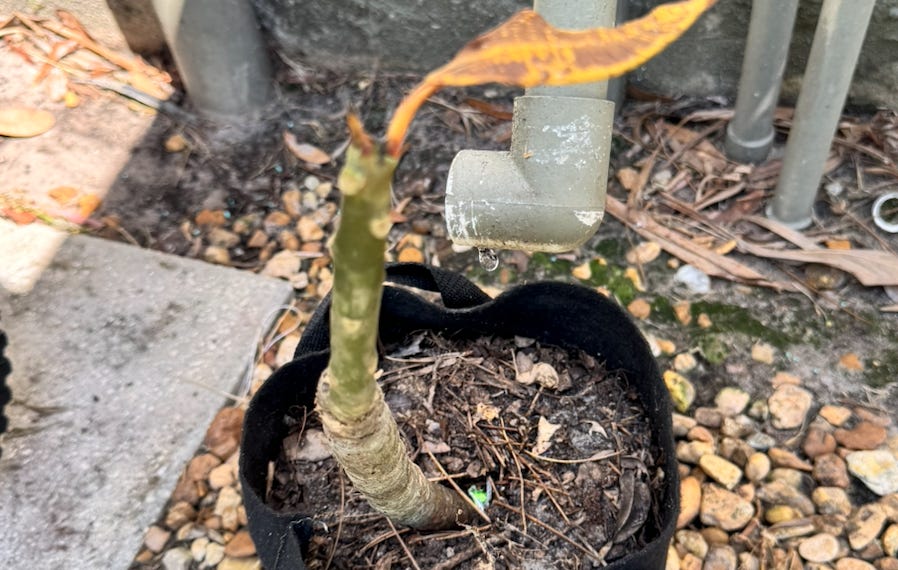
Typically, condensed AC water is simply released onto the ground, creating a significant damp spot. In fact, with the cloth pots first seen here2, you could theoretically just place them in the line’s mini-drain field. Or you could position the outlet over the plants for drip irrigation as seen above.
The down sides here are that: A) You’re eventually going to swamp your plant, and B) you have to take the plants to the water, not the other way around.
(1) The (over?) engineered solution
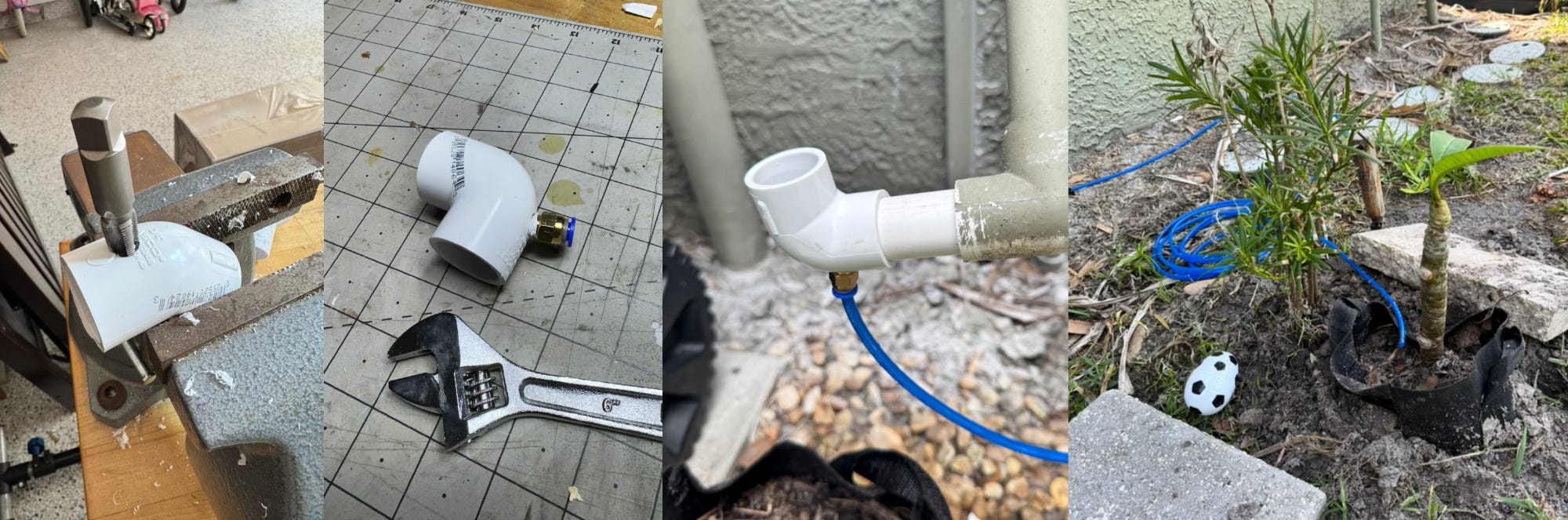
Of course I can’t leave this sort of thing alone. I threaded a quick-disconnect fitting to a 3/4 inch PVC elbow and attached it as shown above, allowing flexible tubing to direct water to nearby plants. Specific details/parts are found here 👉3 if you want to learn more/try this yourself.
Initially, the elbow sometimes fills up and spills, rather than draining directly down the tube. I suspect this has something to do with getting air bubbles out of the tubing, but this behavior eventually seems to stop.
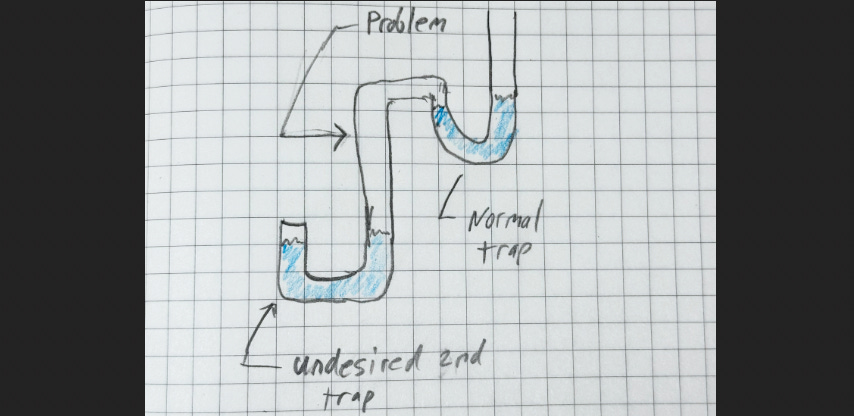
Note that it’s supposedly bad if you accidentally have a setup like what’s shown above, so make sure things drain properly. The extra holes in the 3D-printed fixture below are meant to alleviate such a double-air-lock situation, though it’s just about impossible to see inside.
(2) 3D-printed watering solution
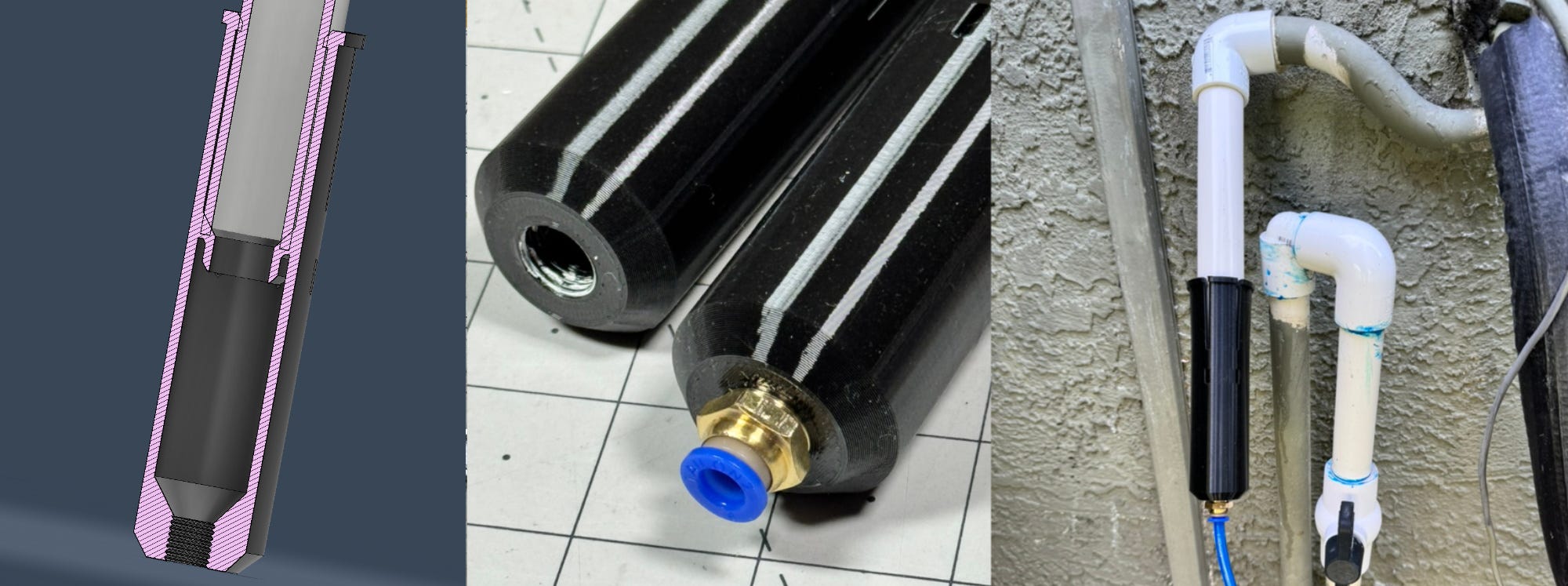
As an alternative, I designed this little fixture to slide onto 3/4-inch tubing and pass water along via a 1/4 inch NPT airline adapter.
It’s designed so that water can build up more here than in an elbow, theoretically providing a bit more pressure to push water into the tubing. It includes a lip feature for water to drip off of, concealing vent holes that help mitigate any potential backup if the normal tubing path isn’t flowing well.
(3) Condensate Pump Solution [Not Mine]
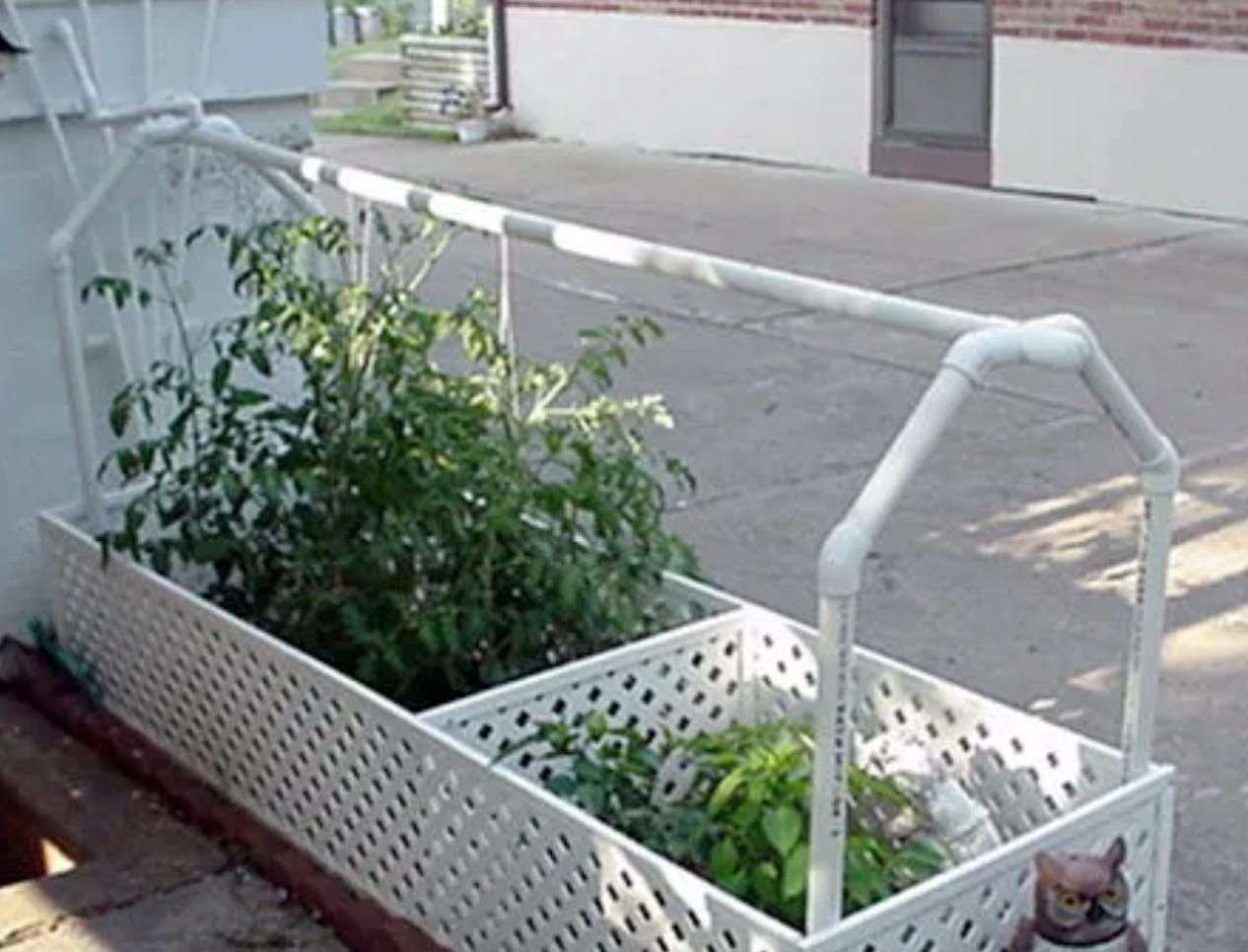
As I considered publishing this, I started to wonder if this was a new concept, or if I was reinventing the proverbial wheel and did a quick search around the Internet. My 3D-printed doodad does appear to be new, but I’m not the first person to design his own AC condenser water irrigation setup.
Instructables user askjerry posted his auto-garden over 15 years ago, which uses a pump that allows condensate to build up, which is then pumped onto his plants. While this adds some complication, it gives you lots more options for water distribution versus my gravity-fed method.
He conservatively estimates that his air conditioner puts off in the ballpark of 350 gallons of water each year. That’s a lot of water, and there’s a very good chance mine — and perhaps yours — puts out even more!
Potential drawbacks and risks
First off, like ~all NUC [Novel Use Case] posts, this is a new idea that hasn’t been tested to any significant extent. There may be a reason/s why other people don’t do it this way.
One obvious problem is that AC drain lines often get clogged with biological gunk and/or filter material. You and/or an AC technician may decide to pour chemicals (e.g. vinegar) down the drain line to cleanse such elements. While I suspect biological gunk wouldn’t generally be a problem for plants, vinegar et al might be problematic after application. Also, don’t form a second water lock as illustrated earlier.
It also might be best to avoid watering edible plants. Though given askjerry’s experience, and the state of industrial farming/pesticides, I suspect it is fairly safe.
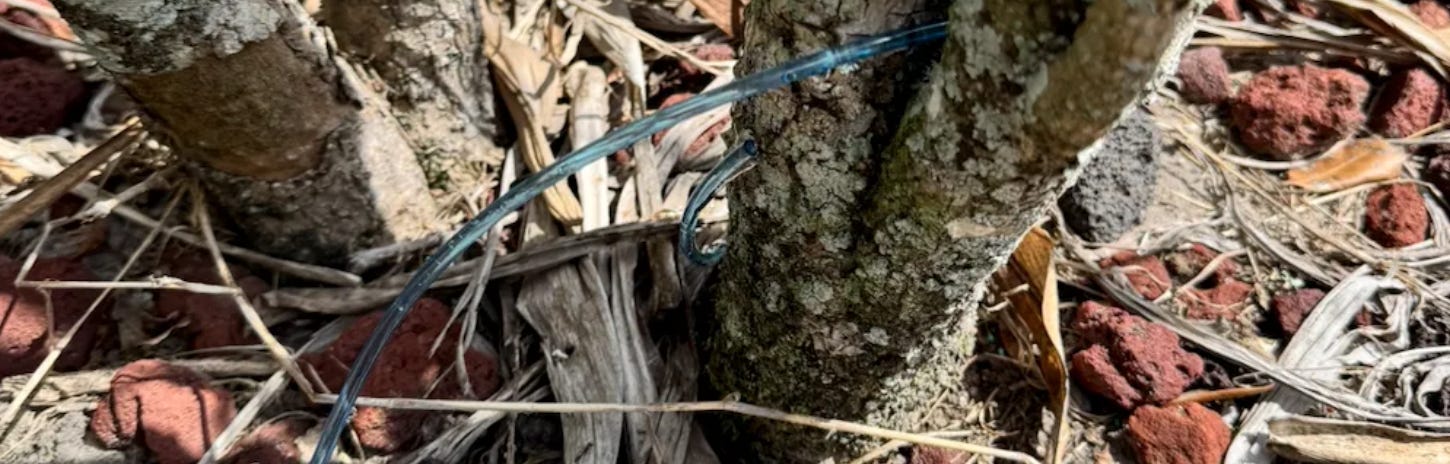
Clogging is a good argument for the elbow design, as it gives good visibility + an alternative exit path for contaminants + it’s easy to remove for cleaning, perhaps using my 3D-printable vacuum adapter).
Combat drought and dying plants with FREE WATER
Interestingly, the day that I set this up I received an EMERGENCY LEVEL 7 DROUGHT ALERT from the county water czar telling me that, among other things, you were only supposed to run your fountain for four hours a day, and that you shouldn’t wash your car unless it is your watering day. Being on top of things, I preemptively allowed my fountain to dry out months ago.4
My car does need a bath though. Maybe I’ll save up my AC condensate and argue the point to the water judge. -JC
You’ve just read part 1. In part 2 I’ll discuss:
ANOTHER free water option
How to water multiple areas
My preliminary growing results.
Part 3 should get even wilder. If you can believe that.
Techadjacent is where I share engineering ideas, builds, and practical tech analysis. Subscribe to get the next post in your inbox — published weekly 👆
Note: Some links may be affiliate
Addendum/Footnotes:
Originally stated as forming on the condenser, which should have been evaporator. Thx for the correction LK! I left the article body vague for now, but this article gives a bit more info on how things work.
I use these 1 gallon and 3 gallon pots/grow bags for various plants. They’re not only cheap and biodegradable (supposedly you can just bury the bags themselves), they also soak up water from low spots on your porch if positioned properly:
Fabric Potted Pots as Drainage for Porch

TL;DR: Place grow-bagged plants in water-prone areas to keep them dry. [Novel Use Case #12]
I’m using air line here, so-named because it’s mostly used to transport compressed air. But it also works fine (apparently) to transport water in this scenario. So one could call it water line
As stated in the world of Idiocracy, plants do need water, like from the toilet. Or, like from the air conditioner. Feeding them Brawndo the thirst mutilator, however, remains questionable at best. Anyway, here are most of the parts you need to make this happen:
3/4 inch PVC elbow - Just get this from Lowe’ Depot
Quick Disconnect/Air line set - there are other options, but the linked one will work well.
Pipe tap set - I haven’t tried that particular set, and you’ll also need the appropriate drill for the pilot hole. I’ve used 1/8 inch and 1/4 inch NPT fittings in my experimentation.
Center drill - Somewhat optional, but if you want to get your tap hole in just the right spot, these are very useful (and something you might want to reuse)
3D-Printed watering nozzle **link to Printables
Drill through the elbow as shown above, leaving room to fully insert the PVC pipe so as to avoid unnecessary leakage. Screw the fitting in and plug the air line into the fitting. Place your free-water line on top of your plant.
My fountain was preemptively kept unfilled to save water, and/or because I drained it and forgot to refill it. Now that the county reminded me that I should run it four hours a day, perhaps it’s time to activate it again.
Also, I should perhaps program my sprinkler system to stop watering on what’s likely the wrong day anyway. If you need excellent control of your settings (to neglect apparently) this Orbit sprinkler controller is what I use. It’s fantastic and was extremely easy to install.