

If you’ve been following me for any length of time, you may be confused about what I do for a living, or perhaps you think I get paid to write. Perhaps you even think I get paid to write on Substack.
To address your preconception, straw person1, yes, my primary income comes through writing. Largely writing that draws from “a deep understanding of a variety of technical subjects” according to my profile page. I don’t get paid directly from this Tech Adjacent Substack newsletter, though I suspect it has helped open up some opportunities. I have a few other sources of income as well.
I don’t expect you to be interested in me per se. However, I hope that explaining how I make money as an independent technical content creator, and what has worked for me in 2025, will be instructive for you.
2025 Income:
First, let’s break down my income sources:
Contracted writing
Contracted video work/presentations (online class)
Product sales, largely through online marketplace Tindie
Advertisements: YouTube/Amazon
You can make your assumptions about my actual income in dollars, but here’s how it down in pie-chart form:
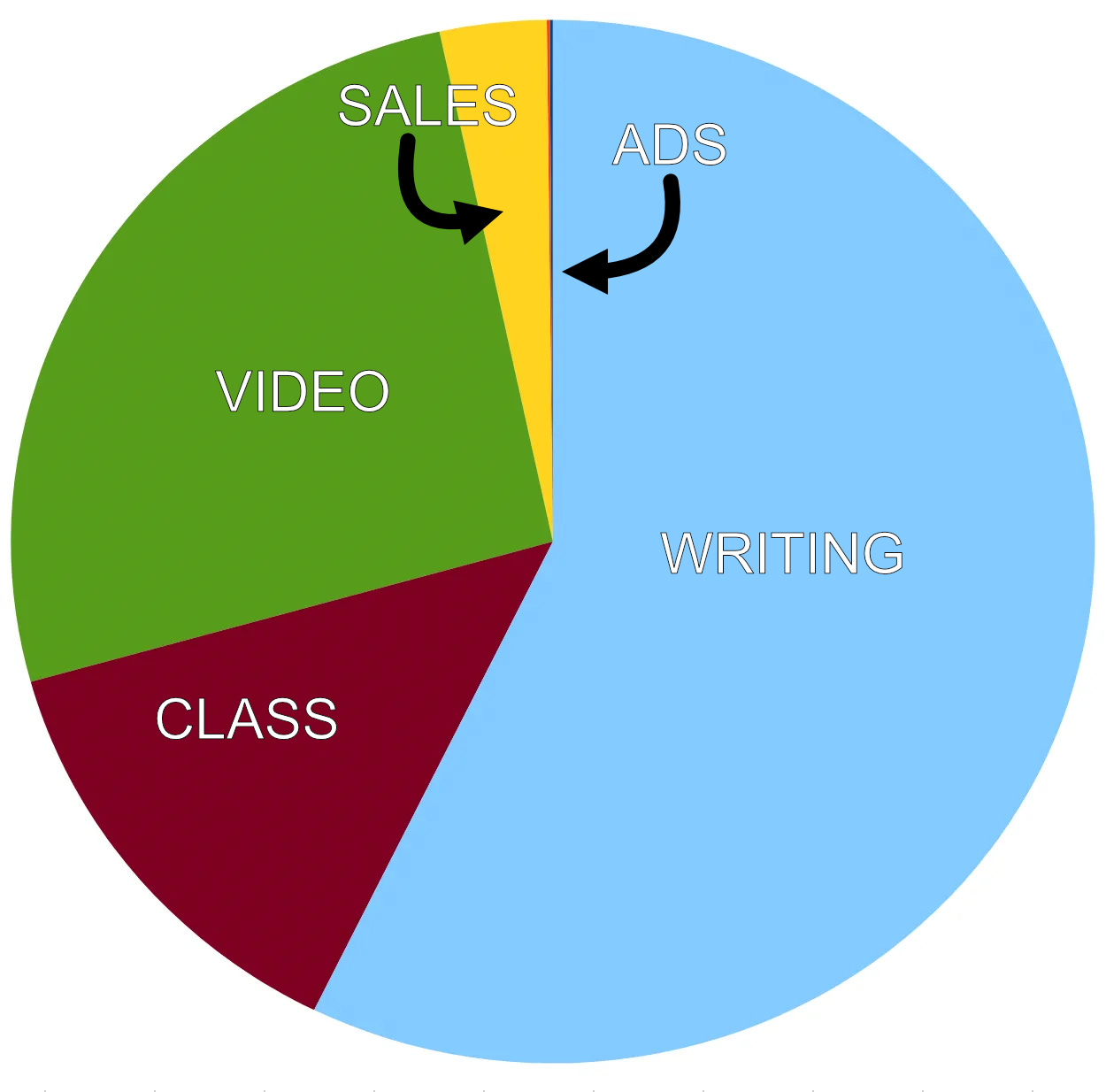
As you can see, technical writing (blue) is indeed where I make most of my money, followed by about half that (green) in video-ish content, and about half again for instructional classes (red). The small yellow slice is things I sell on my Tindie store, followed by almost invisible slides for YouTube ads and Amazon affiliate links.2
Income change over a decade-plus
Below is an unlabeled chart of my income since I started starting writing for real, actual money. Note that I was employed as full-time as an engineer in manufacturing automation up until 2016. Also, my wife was working, and we didn’t have kids for most of this time. So, despite a rather meager-looking writing income in 2013 to 2015, that period of time was actually pretty cushy $$-wise.
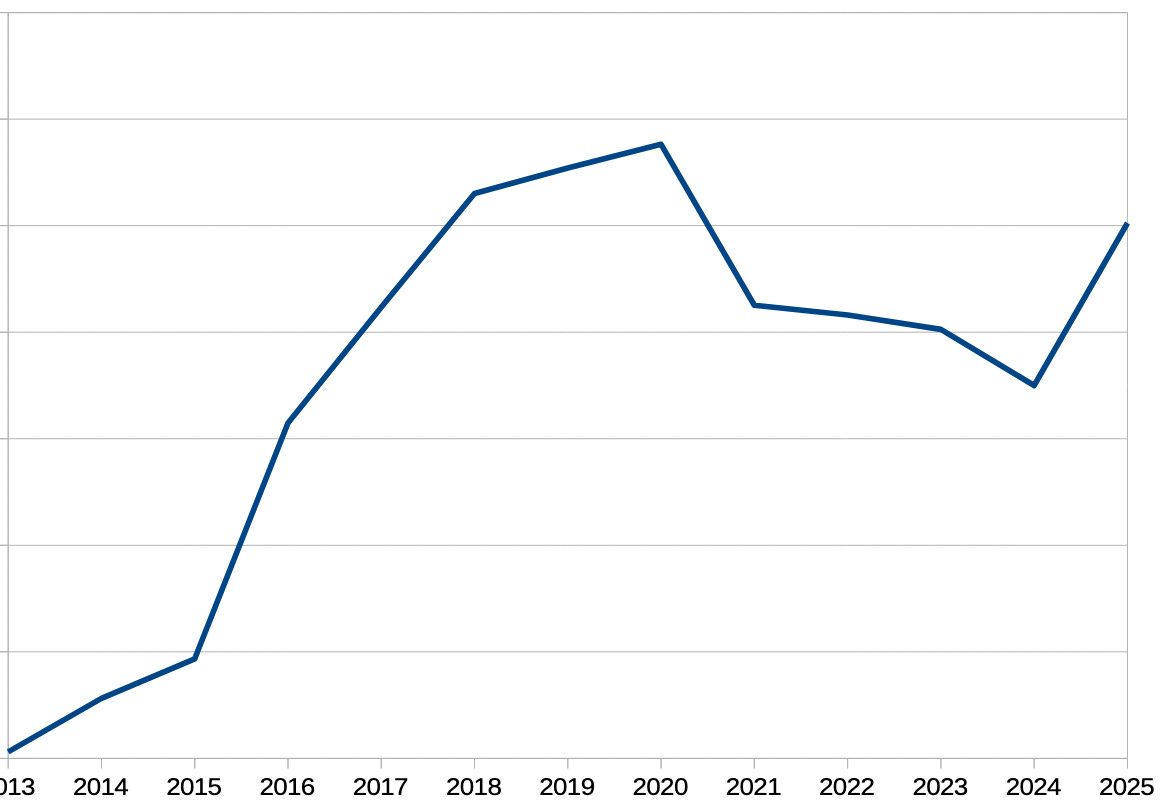
Since becoming a full time technical content creator3, 2020 represented a high point (so far) followed by a few not-as-good-but-still-not-terrible years, and a bit of a rebound in 2025.
On a more granular level, below is a chart of what I invoiced monthly in 2025. Things started out semi-slow and bumped around to a few very good months, and a few that weren’t great. Perhaps the beginning of the year represents when customers are just getting back from vacation and/or are deciding the year’s priorities, and the end is when they’re ramping down. I’m open to other interpretations.
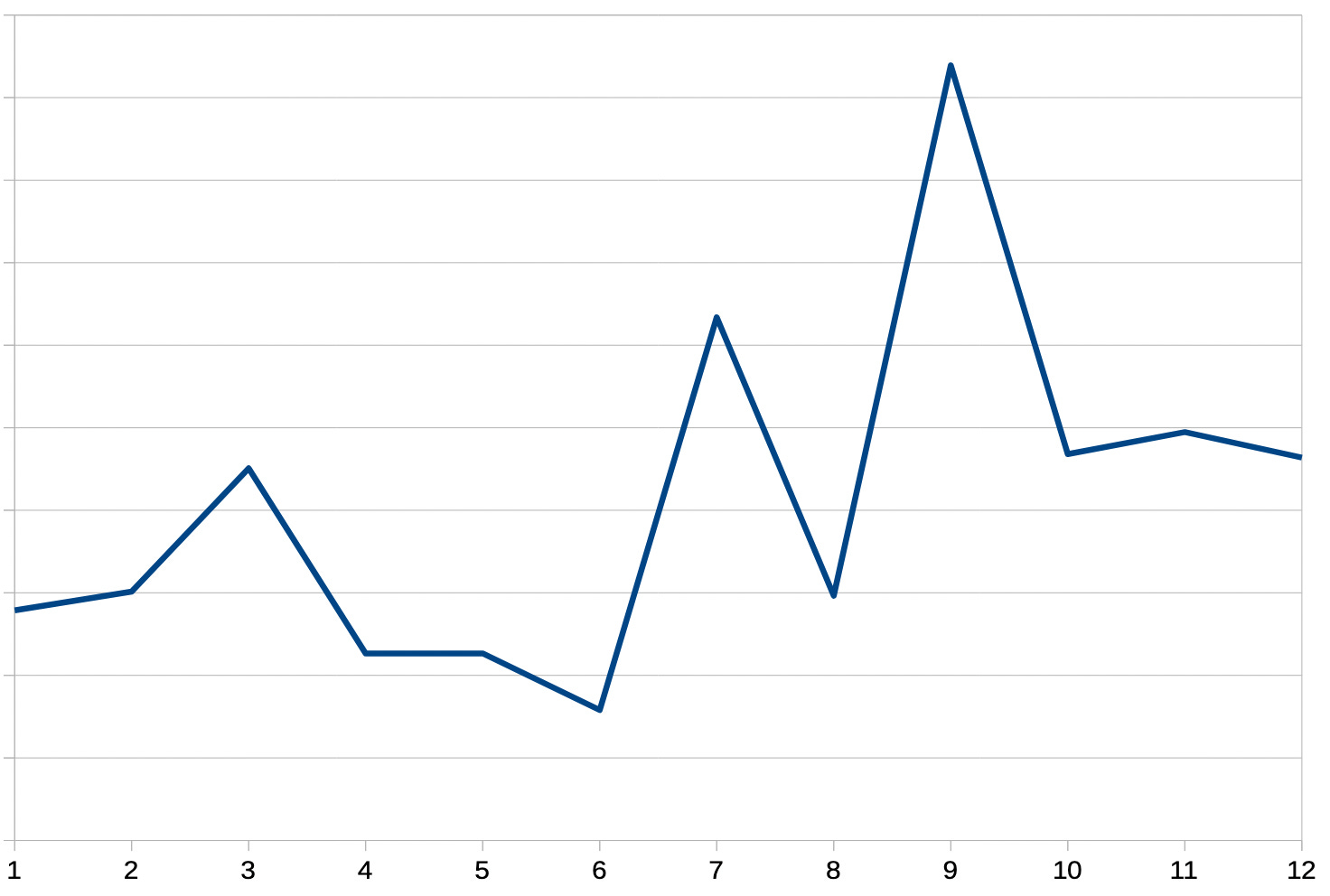
I’m glad to see that things things are looking up on a macro level, though I would certainly be happy to get more work in the pipeline (see Final thoughts 👇). Here’s what I believe worked for me last year (and could potentially work for you):
What worked for me in $2025
Negotiation - how negotiation works will different depending on the industry, and your business personally, but perhaps the best value you can give yourself in $$/time terms is negotiating your rate. Not only does this help advance your career, but it also helps keep you from sliding backwards due to inflation.
While it can be intimidating to ask for more money, as far as I can remember I have never lost a customer when asking for a raise. Sometimes the result is a yes, sometimes a no, and sometimes we meet in the middle. If terms aren’t satisfactory, you may have to move on, but it can generally be your choice. See footnote4 for a bit of an offbeat take on this process.Reach out to potential customers - While I’ve certainly had customers referred to me (thanks!), most of my business has been obtained by reaching out.
In more than one instance, the ultimate customer wasn’t even the entity I initially reached out to, but was a product of a referral based on contacting someone else. Get creative and work all the angles, send emails, make phone calls, contact people via social media. It can be awkward at times, but the alternative of not feeding your family or… getting what one might consider a real job is a great motivator.Track Your Work Hours - I typically charge by the job, but I still track my hours when working on assignments. This allows me to know if I’m billing too little for something, or if I’m making at least the hourly rate I’d like to maintain. Ultimately, you’re always selling your time.
This is also helpful when you have to put in hours that you won’t get paid for, e.g. marketing/negotiation👆 That way when you hear that little voice in your head say, “You didn’t do any [paid] work today,” you can look at your logged hours and say, “Yes I did, and it’s actually a very profitable pursuit.”Longer-Form Articles - I’m not sure that this was a conscious choice as much as where the industry is going. At one point, the majority of my writing work involved looking at people’s projects and summarizing them for publications like Make, Hackster, Hackaday, etc. The cool thing about short-form is that it’s easy to track these bite-sized units of work/$$$. Do X articles in a day, get paid Y, make X per year. The bad thing is that it can get kind of rushed, and you have to string together a lot of them to = success.
The elephant in the room here is that AI — ChatGPT et al — is also very good at summarizing projects and it’s waaaay cheaper than I am. Thus the shift to longer-form articles that require a lot more research/specific knowledge/thought, but typically pay much better per piece because of the extra effort/competence involved.Contracted Video Content and Classes - I did a significant amount of contracted video content this year, and did an online class series for another. Whether these particular jobs will continue into 2026 is kind of questionable, but that is often par for the course.
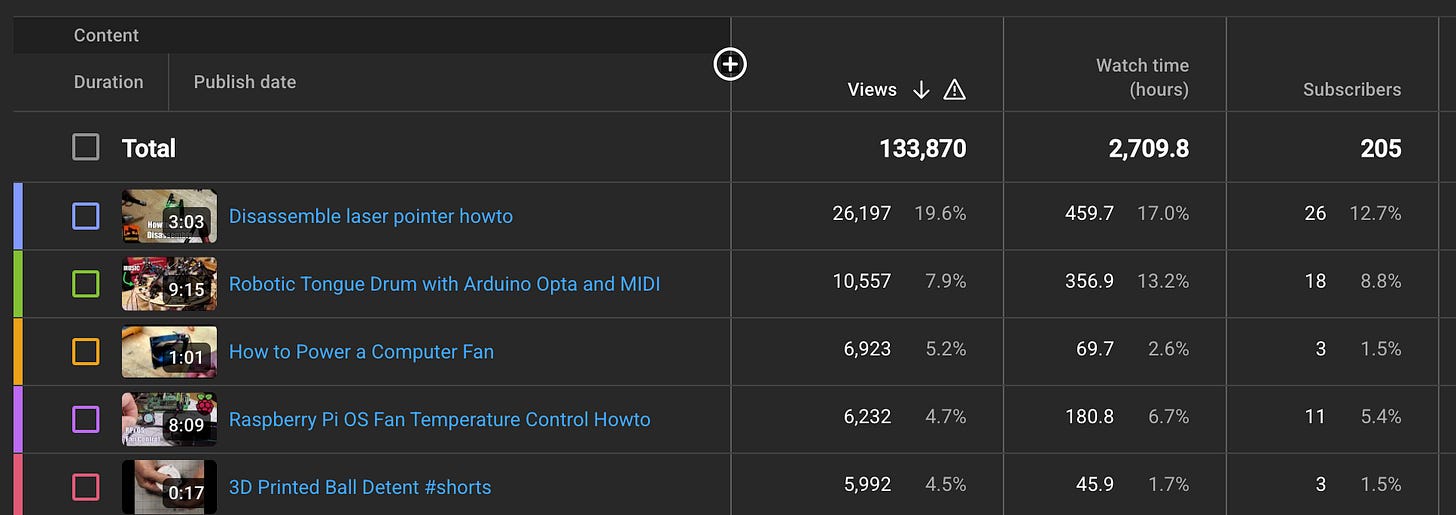
“Disassemble laser pointer howto” has been a perennial favorite on my Jeremy Cook DIY YouTube channel, even though I feel it’s quite poor.

What didn’t (directly) work in $2025
Affiliate links - Long story short: if you click on an “affiliate link” here or anywhere else, the linking site will typically receive a small cut of the purchase price at no cost to you5. I maybe made a cool three figures with my affiliate income. Enough money to take my family out to eat at a moderately priced restaurant. Score!
YouTube Ads - Again, somewhere in the low three figures here. That’s with 133,000+ views and well over 6000 total subscribers. Definitely not worth the many hours I put in (though I didn’t track this) to make and produce non-contracted videos.
-This is NOT big green VIDEO chunk of my income pie, which instead registers video that I was contracted to make and that I didn’t publish directly.Substack - I don’t get paid directly from Substack, with the exception of affiliate links👆, which might net me a Biggie Bag or two on a good month (see footnote #3. Of course, if you want to sponsor Tech Adjacent, do get in touch👇).
-WHAT DID WORK on a non-monetary level is writing and queuing up posts for Tech Adjacent when I felt inspired or was otherwise available. It’s nice to be able to keep your newsletter going when you’re really busy for a month or two, though I generally give them a once-over before publishing.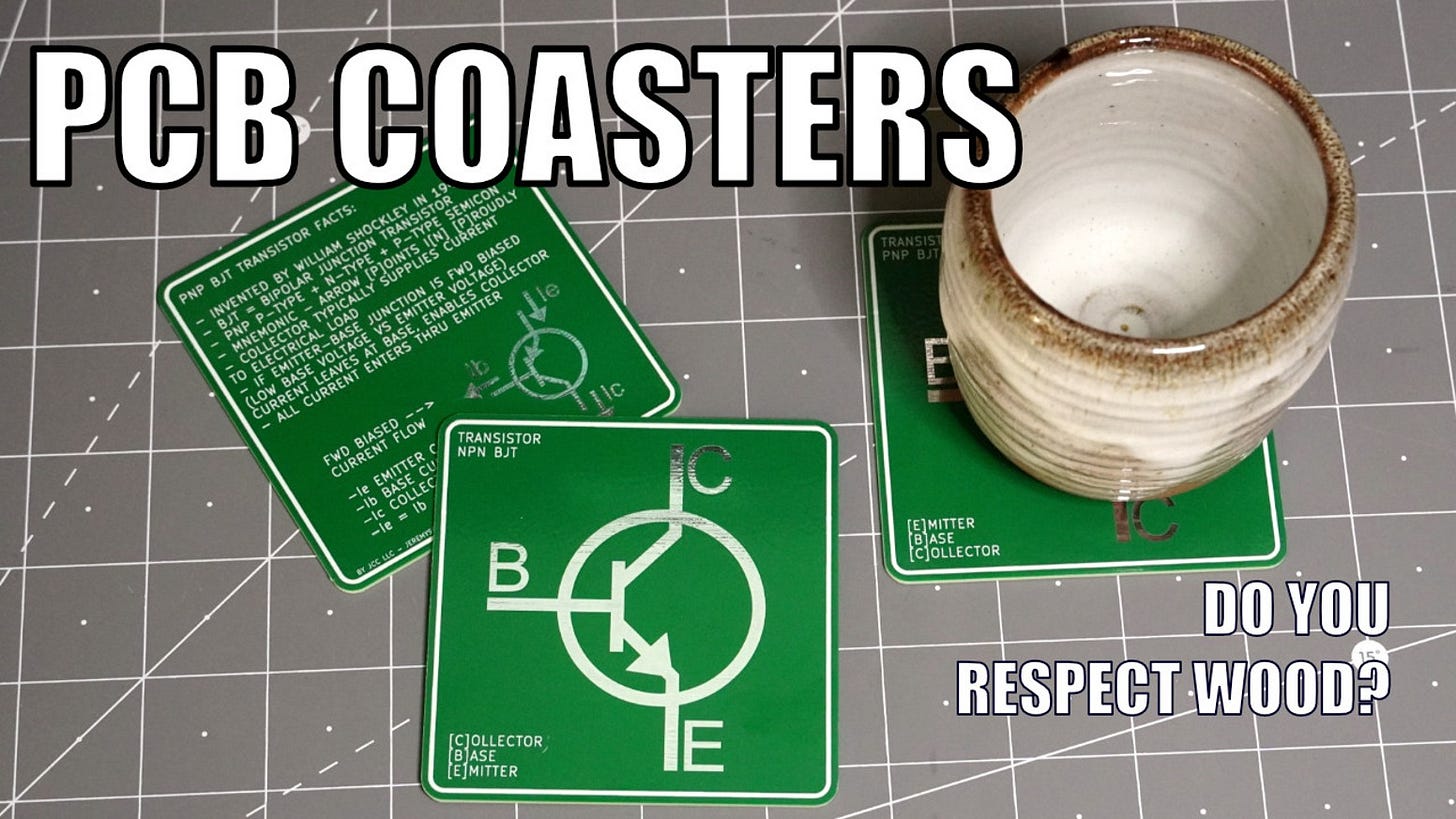
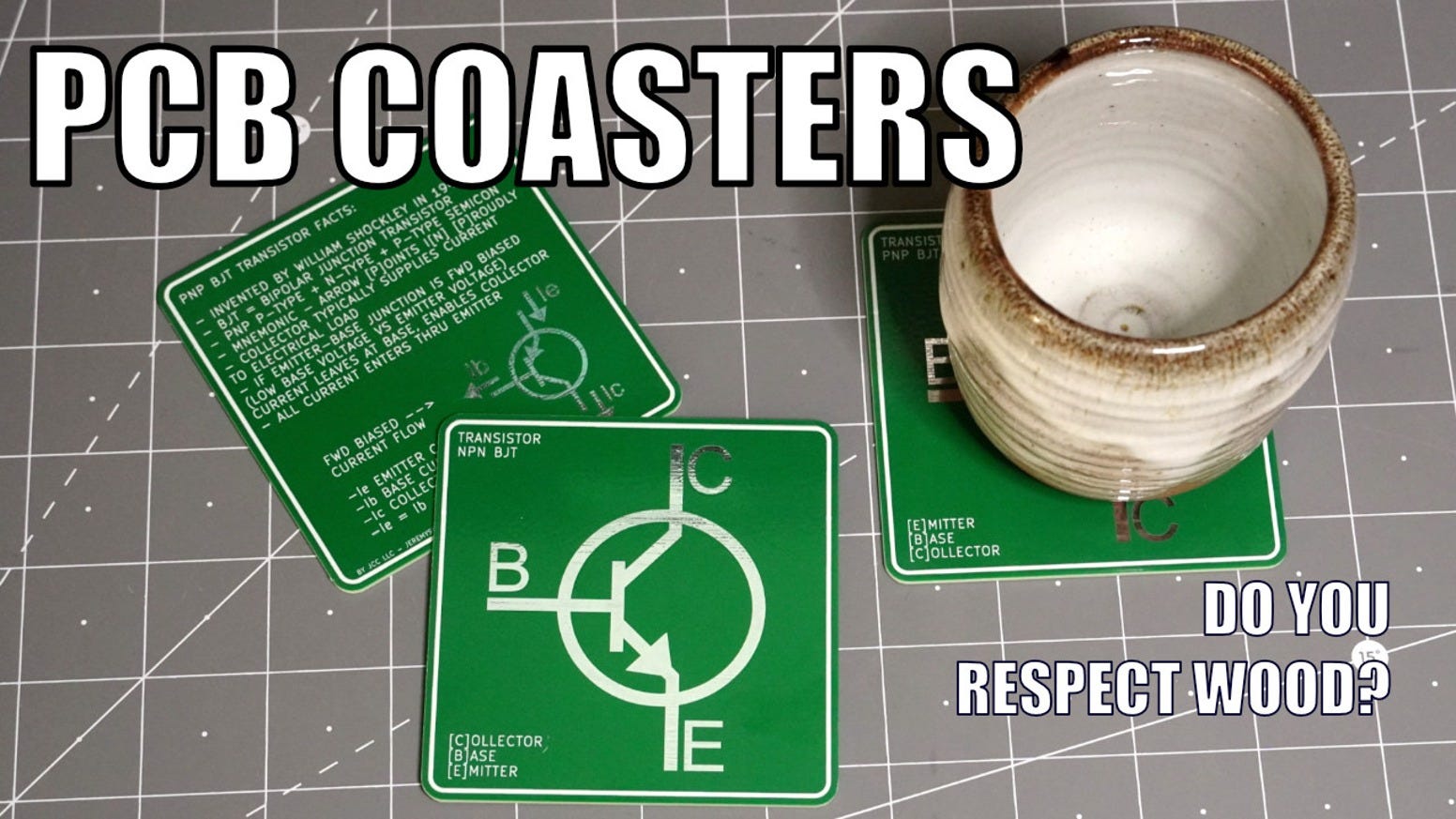
Kickstarter - as publicly stated there, people pledged $852 to make this a reality. In reality, this covered the materials of me making something cool, but little else. Now that the de minimus exemption is no longer, I’m not sure it would have even covered that.
-They’re still available on Tindie if you’re interested in such a thing.BUT, but, but…👇
AS CAVEATS to all of this, I suspect that me putting out this Substack newsletter helped secure one or more jobs that maybe wouldn’t have otherwise happened. It also seems YouTube helps drive sales to my Tindie store, which itself helps burnish my reputation as someone who is knowledgable and can make stuff.
So while these things might not make sense in direct $$$ terms by themselves, perhaps they do in a holistic/marketing sense. If nothing else, it helps keep me sane (maybe) and my skills sharp(er).
Final Thoughts
Considering my results over the years, I think the key to being productive as a self-employed person boils down to:
Figure out where you are getting the most buck for your bang (bang being your time) and focus in on that.
Even if you nominally get paid for something (e.g. technical writing), you can often get a better buck/bang overall for this if you also do a good job on supporting things, e.g. marketing, negotiation… newsletters.
Have I followed this advice over the years and in 2025? I’m not perfect, but I’ve certainly improved on #1, maybe even #2. Hopefully 2026 will see the graph tick up again. Speaking of which:
If YOU need technical content (and/or gadget) creation for your blog, website, YouTube channel, show, event, or otherwise, please do reach out in the comments or via hi@jeremyscook.com. I could always use more work in my pipeline!
Thanks for reading, and I hope your 2026 is starting out great!
Thanks for reading! I hope you will follow along as I post weekly-ish about engineering, technology, making, and projects. Fair warning: I am a native Florida man, and may get a little off-topic in the footnotes. Maybe I even had an alligator or two as pets growing up. Perhaps they are alive today and could be used to test earth-wormhole pet friendliness. -JC
Any Amazon links are affiliate
Addendum/Footnotes:
Straw person: Because anyone should be able to have questionably accurate opinions
I may or may not have factored in the $$ I received from a successful Kickstarter this year that didn’t really earn me any money. Given how the math works out, it probably doesn’t really matter, and leaving this nebulous helps keep my total income publicly fuzzy.
I’m not crazy about the term “content creator,” but it is perhaps the best way to describe what I do.
Negotiate Your Hourly Rate in Wendy's $5 Biggie Bags

At some point in the last few months, I went to Wendy’s with my son. With a family of five, dining out can get expensive, and I started to consider how much I get paid… in Wendy’s Biggie Bags. I’ll keep my specifics private, but do the math, and whether you get paid $15, $50, or $150/hour you may just be impressed with yourself!
H/t to Jason for encouraging me to negotiate. And for reading the footnotes if you see this.
Unless you factor in the macro effects of affiliate links and marketing in general, which is certainly costing everyone a bit of $$$ in aggregate. I don’t make the rules.