

With the advent of AI, my job as an engineer and technical content creator has changed. Not necessarily for the better — or for the worse — but I’ve had to get used to a new landscape where jobs can be profitable, but more intermittent.
At least that is the case for for me personally.
In other words, I seem to have gone from a semi-predictable business income, to what seems to be more of a monetary drought and tsunami cycle.
Or, to put it visually:
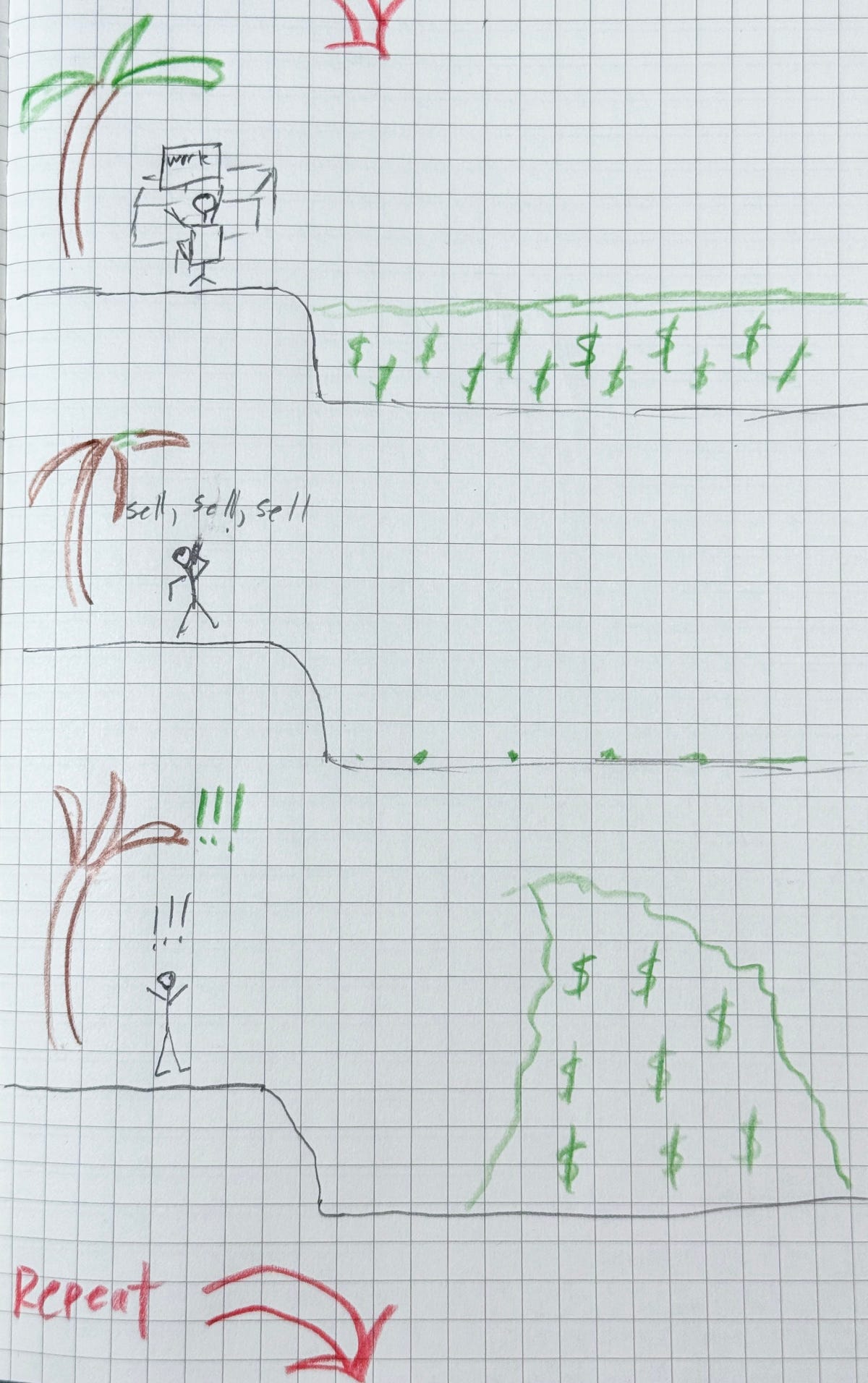
More details to follow, along with ideas about how to deal with this natural self employment/small business pattern. TL;DR: keep selling yourself!
If you’re into offbeat engineering, real-world builds, and practical tech thinking, subscribe 👇
End of 2025 / start of 2026: A good year in store! (???)
At the end of 2025, business was looking good. I’d completed a decently profitable year,1 and had semi-regular business arrangements with three customers, plus another that I was hoping would soon commit. Together these jobs would generate roughly enough income to sustain my current frugal-ish, family-of-five lifestyle.
I was also counting on intermittent work that I would find/do throughout the year so that I could afford luxuries like a functioning air conditioner (and free water?), eating out at places that tolerate children, and minivan repairs.
I wasn’t selling my services heavily. I was busy with actual work. That turned out to be a mistake.
Early-Mid 2026: Scrambling for Business
Fast-forward to a month or two into the year. Things had been average invoicing-wise, but by this time I generally expect customers to be coming out of their Christmas/holidays slump and for my business to be in full swing. For various reasons, 3/4 of the customers I was planning to work with dropped out of the picture early on.2 Interestingly, the one I wasn’t sure about committed during this period, so I wasn’t entirely unemployed.
Oh, and to top it all off, the platform hosting my JC Devices electronics store went down for quite a while. It’s not a huge chunk of my income, and they’re back up now, but it was a bit like adding insult to income injury to put it in mostly alliterative terms.
But you’re never actually unemployed as a small business owner. I had instead swapped roles from writer/engineer to head salesman. My first instinct was to contact my normal customers and other people that sometimes exchange money for my services. This is a good first step, but it also limits you somewhat as:
I only know so many people, and
I can only really keep track of so many people in my head

So, pushed to my normal limit, my twofold expanded plan of attack was:
As I poked around on the Internet/Twitter/LinkedIn/et al, I noted interesting contacts and businesses on a spreadsheet, and added existing contacts there as well. I added columns with notes as well as the date of my last contact, auto-highlighting it to yellow to show that I should reach out after it had been X number of days.
I contacted not only people that I knew, but sent out emails, messages, and even cold-called people that seemed like they might have some potential business. LinkedIn, which I’ve generally eschewed in times past, seems especially good for messaging businesspeople. Cold-calling is terrifying for me, but once I’m on the line I’m not too bad.3
If there was a potential opportunity, I tried to take the chance to video chat with people. Whether new or old contacts, it’s a good way to remind clients that you’re human — and maybe come up with some new ideas on how you can work together.
While it took some work, things seem to be turning around. I can see potentially being very busy in the near future:
Mid 2026: potential payoff - tsunami inbound?
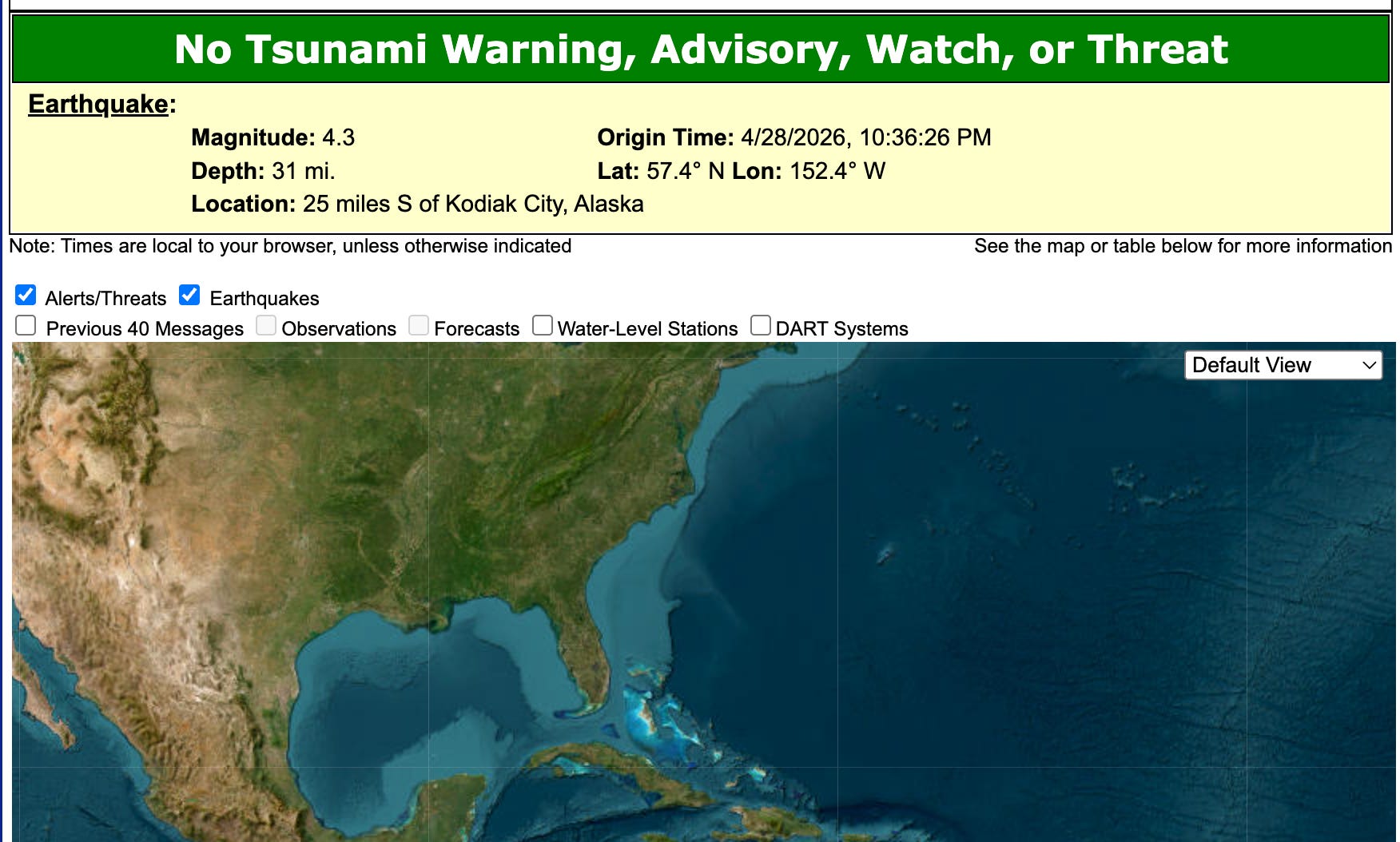
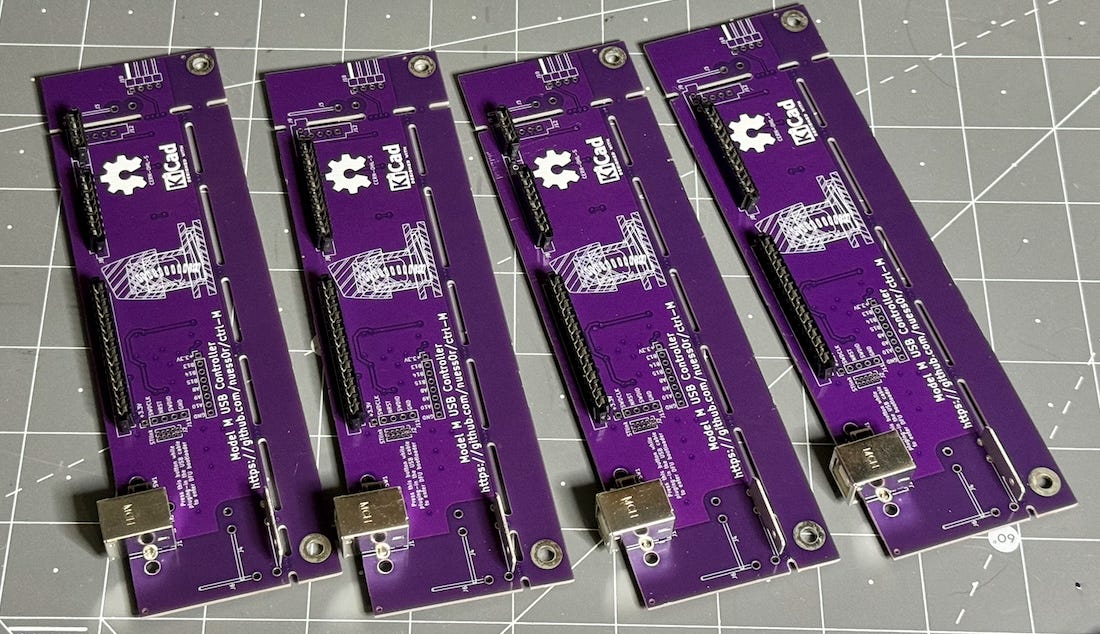
This morning, April 24th, I sent out two quotes, fulfilled an order for a set of keyboard controllers,4 and… turned down another job that just wasn’t a good fit. Ultimately, business success comes when the money hits your bank account, but this was still represented a rather encouraging set of milestones.
Interestingly, one big (potential) success came from me contacting someone I’d met and talked about working with years ago. While working together didn’t really… work out at the time, it just so happened that reaching out more recently opened some doors. Pretty neat.
Selling yourself/your business is a numbers game in some sense, but it’s not like playing the lottery. People are in all sorts of different states business-wise at any one time and you just have to catch the right person at the right time — and, ideally have built up a relationship and/or reputation to capitalize on this. Contact 100 people and you might catch 6 people at the right time. 4 might be a good fit for your business, and 2 might actually work out.
Of course, you then have to be able to do the work, in addition to the selling work that you just did. “What you do,” one might say.
Mitigating drought/tsunami cycle
While I can always do “what I do” (experiment, build, and create content around technology), if no one is paying me for it,5 am I actually doing any work? It’s a bit like asking if a tree falling in the forrest makes a sound if no one is around. I’d say the answer in both cases is yes, even if arguably matters less.
So as small business owners,6 we should always be selling. Even when it seems that we have enough business or even more business than you can handle by yourself. And if it comes to the point where you are constantly cash/work tsunami’d — first, congratulations — then perhaps it’s time to consider taking on contractors or employees to help with… whatever it is you do here.
Alternatively, you might consider paying someone to do marketing for you. At this point I have little to no experience hiring people or paying contractors. I will cross that bridge if I ever arrive at it.
Treat marketing work, reaching out, etc. not as slacking off or not working, but as legitimate part of your process. To this end, I’ve started keeping track of time I spend marketing — as I do with my paid projects — to help me justify that I have indeed done something productive if I’m reaching out (even if I’m not directly getting paid for it).
It’s an important attitude shift that I certainly need to work on. Maybe you do too.
$$$ tsunami/drought final thoughts
To finish out the article, a tsnumami of work/money is great. I think every businessperson’s goal should be to do work that is so excellent and valuable that clients are eager to throw money at you.7 Just make sure you’re charging enough —though that’s a whole different conversation.
Who knows what the future holds for Jeremy Cook Consulting LLC, but hopefully it will be closer to tsunami than drought most of the time going forward. I hope the same for you!
Now I just need to remember to keep selling even in the good times. -JC
Techadjacent is where I share engineering ideas, builds, and practical tech analysis. Subscribe to get the next post in your inbox — published weekly👇
Thanks for reading! I hope you follow along on this Techadjacent journey. Fair warning: I can and do get a little off-topic in the footnotes.
Note: Some links may be affiliate
Addendum/Footnotes:
See below for 2025 details:
Technical Content Creator Business Update 2026: What Worked, What Didn't in 2025

If you’ve been following me for any length of time, you may be confused about what I do for a living, or perhaps you think I get paid to write. Perhaps you even think I get paid to write on Substack.
That’s sort of glossing over the details. All of them are business relationships in one form or another, and I anticipate doing more work with the majority of them. I won’t get into the details here, but if you really want to talk about it, I list a phone number on this post so that lawyers and/or other concerned parties with the Cartoon Network can reach me (the post explains things a bit more).
Also, I have more than four customers, but those were kind of the big jobs that I was counting on.
One could say that they dropped out during the “winter,” but here in Florida we generally have about a week ~cold weather until it jumps to summer. This yeah was surprisingly chilly though. Supposedly there were brief snow flurries in my neighborhood.
This process seems weirdly similar to dating, at least how it was many years ago when I was in the market. Sure, maybe someone had willingly given you a phone number, but it can still be terrifying to take the next step and actually call.
Also, as explained a little later in the context of sales, both can be a bit of a numbers game in that your timing has to be right. Sure, that person might consider dating you if single and/or in the correct geographic area — or whatever — but the situation isn’t always right.
Interestingly, and perhaps not coincidentally, by the time I got comfortable with this, (in the dating realm) I met my wife and it soon became an unused/unneeded skill.
Writing on Techadjacent, for example, is nominally unpaid work. If YOU would like to change that, do visit my Sponsors page. OTOH, one might classify this as a more passive form of marketing work as long as I don’t get too off-the-rails with Floridaman stories and the like.
Ultimately we’re all business owners, most of us small business owners in that we contract our services to one entity in the form of employment… And that we don’t own Amazon. So you, I, we. If you are Jeff Bezos, Elon Musk, et al, welcome. As noted in footnote 5, Techadjacent is looking for sponsors.
A salesman I knew from my previous factory automation engineering employment told me that his boss loved signing large checks to him because it meant that he was also making lots of money. I think I looked down on salesmen when I first started in engineering, but now that I know a bit about how hard it is, I have a lot more respect for what they do.
Also, the fact that they can directly demonstrate their value to the company is pretty neat. Good engineering is extremely valuable, but a bit harder to demonstrate.
And I’m maybe a little nicer to the people that come to my door trying to sell new windows or whatever.